Even if you have plenty of angling experience in different aquatic venues, attacking the deep blue ocean is like starting from scratch. And no matter how hard you work at it and how fast you pick things up there will still be days when you troll, troll, troll to no avail. When the tuna bite has dropped off a cliff, the mahi-mahi have gone MIA, and the ocean seems bereft of billfish, there’s one almost surefire way to save the day: turn your attention to blueline tilefish.
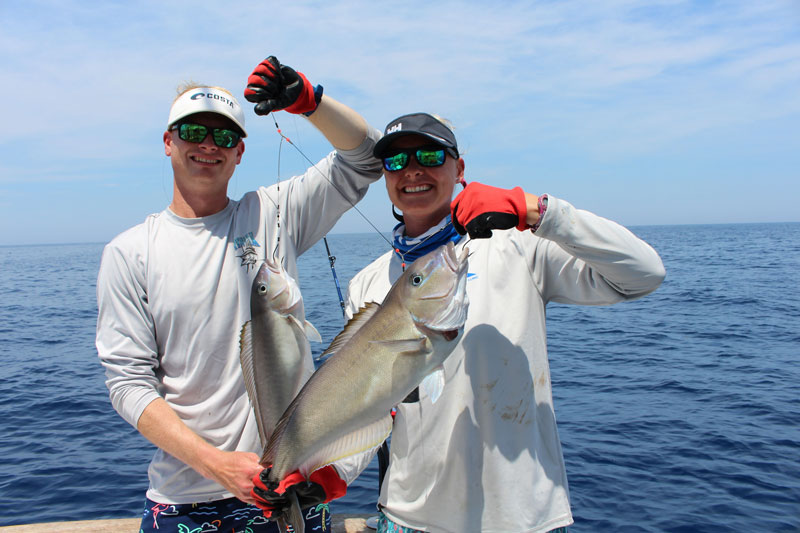
What are Blueline Tilefish
Blueline tilefish, sometimes called gray tilefish, are bottom fish usually found off the DelMarVa coast on patches of live bottom, rock, or shell in 200’ to 400’ feet of water. Often the best spots will be right in the middle of that depth range. Most of the fish you catch will be in the two- to five-pound range, but sometimes you hook into 10-pounders and on rare occasions, fish pushing 20 pounds.
Bluelines feed mostly on crustaceans like crabs or shrimp, small fish, worms, and squid. They can live to be 20-plus years old and their stocks are generally believed to be quite healthy, although the Mid-Atlantic stock has not been officially assessed. Years ago they were under almost no fishing pressure, but in recent decades as more and more recreational boats have been able to get offshore faster and faster—and more and more of them draw a blank on targeted pelagic species—fishing for blueline tilefish as a backup plan has become common.
Record Blueline Tilefish
The biggest blueline tilefish ever caught in our zone are:
- Delaware – 25 pounds, eight ounces
- Maryland – 21 pounds, three ounces
- Virginia – 23 pounds, five ounces
How to Find a Blueline Tilefish Hotspot
As long as you’re in the appropriate depth range bluelines will commonly be found in many of the same areas you’d fish for pelagics. Just inshore of Poormans, at the Rocky Bottom, and the end of the tip of Washington Canyon all hold bluelines. To nail down a specific location the best thing to do is dedicate some time to prospecting. The fish will hang together in concentrations, but often over very large areas. So you might catch one here or there, but when you drift across a good area you can often catch one after the next on a single quarter-mile or so drift.
Another way to find blueline spots is to keep an eye out for orange polyballs as you cruise through the ocean. When you see commercial fishing gear inshore of the canyon edges and in that 200’ to 400’ range, it’s often set over live bottom for either these fish or black sea bass (which you’ll often catch mixed in with the bluelines). Even if you’re trolling around early in the day looking for pelagics, as you go by those balls mark the spot on your GPS so you can come back and check it out later. Also eyeball your fishfinder as you troll around in waters that are the right depth. You’ll be able to spot fish right on bottom on the meter when you pass over a good blueline spot, especially if you zoom in down deep.
How to Catch Blueline Tilefish
Most days the bluelines aren’t shy about biting, and finding them isn’t half the battle—it’s 90 percent of it. Commonly if you stop over a good spot and drop the baits, within moments of the weight hitting bottom you’ll have a bite. As for what sort of bait to try, squid is the go-to offering most anglers use. “Meat curtain” rigs with four to six 8/0 circle hooks on short droppers are a commonly used rig, or some anglers will simply tie up large top-and-bottom rigs. You’ll need plenty of weight to get down and stay down that deep, though, so carry a few one- to three-pound weights.
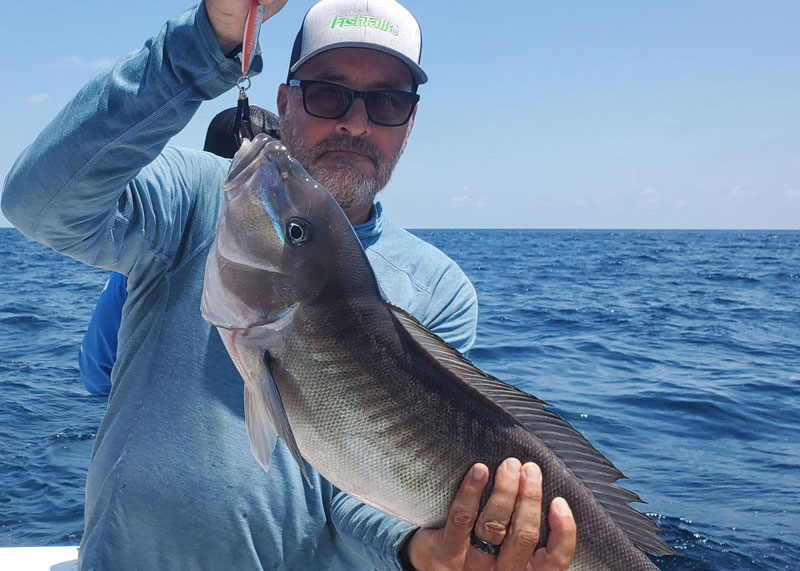
Another option that works very well is using 12- to 18-ounce jigs. These need to be baited unless the fish are uber-aggressive, but a fast-sinking jig rigged on bluewater jigging gear with 40- or 50-pound braid mainline works wonderfully as a squid-delivery method in 250’ or 300’ of water. Octo-jigs with twin hooks are often the most productive, and you can bait each hook up with a separate squid strip so if you miss the first bite you don’t have to reel all the way back up to rebait right away.
Okay—ready to take a shot at blueline tilefish? Grab some squid, head off into the Atlantic, and try dropping down deep. It may not be like catching tuna or billfish, but a mess of blueline tilefish can save the day. And once you get a mouthful, you’ll be back for more.
Blueline Tilefish FAQs
Are blueline tilefish good to eat?
Blueline tilefish are exceptionally tasty, with a slightly oily white meat that’s reminiscent of croaker fillets. They’re great when pan-seared, cooked with white wine sauce, or baked in a garlic butter sauce. When you fillet them, note that you’ll want to cut out the extra row of bones running through the center of the fillet from the tail to about halfway up towards the pectoral fins.
What sort of fishing license is needed to keep blueline tilefish?
To catch and keep tilefish of any type the boat needs a (free) Private Recreational Tilefish Permit. Go to the MAFMC webpage for the full scoop and to apply for a permit.
How do I catch the biggest blueline tilefish?
You can usually catch better numbers of tilefish with a meat curtain, but jigs tend to tempt the biggest bluelines in the school and often produce the pool-winners.