Maybe you get to go winter fishing regularly, maybe it only happens a time or two, or maybe you hang up your rods and reels until the trees start budding. But even the heartiest of the diehard anglers among us must, every once in a while during the middle of the winter, cancel his or her fishing plans due to the weather. Whatever your attitude might be towards winter fishing, it’s a sure bet that at some time this month you’ll be sitting at home staring out the window as the wind gusts and the snow blows, pining for spring. And when that time arrives, there’s only one cure for your ills: fiddling around with fishing tackle.
The unfortunate outdoor environment may be a hindrance at the moment, but it’s also an opportunity because that fishing tackle would surely benefit from a midwinter tune-up. Ready to start fiddling with a purpose? These 10 tasks will not only keep you busy, they’ll also help you catch more fish come spring.
- Strip down any reel spooled with monofilament three or more seasons old, and put on new line. Regardless of how much use it may have had, monofilament loses strength over time due to UV deterioration. It also grows more brittle, and becomes springy with “memory,” which causes more tangles. Three years is the most you can get out of a spool of line before it either starts snapping prematurely and/or becomes difficult to use.
- Cut the first 10’ of line off every rod and reel, regardless of line type. This is the section of line that gets the most wear and tear, from rubbing up against structure, boat hullsides, tree branches, and more. On top of that, knots weaken over time and depending on a knot tied months ago is a surefire way to break off come spring. Chop away the first 10’ of line and you eliminate both problems at once.
- Loosen the drags on all your reels. Ideally you’ll do this anytime a reel will sit for more than a month or so, but if you didn’t loosen those drags months ago now’s the time. Leave them fully tightened and the drag washers can deform, which will make them jerky and uneven when a fish pulls out line.
- Cut a rubber band in half and saw it back and forth across the bail rollers on all your reels to test how smooth and silky they are—or are not. When you find a sticky one, lube and/or replace the roller bearing. The same trick works well for offshore rods with roller guides.
- Get some metal polish and shine up your spoons. Chances are they’ve grown pretty dingy over time, and if you want that flash to call in fish from afar you’ll want to purge the patina. Luckily, a few minutes with a rag and some polish is usually enough to make a spoon look like new.
- Isolate powder-coated jigheads that have chipped, and seal them in a small zipper-lock baggie before putting them back in your tacklebox. They still work just fine, but once the paint on a lead jighead chips it will get paint flakes and lead dust all over the place. Leave it loose in the tacklebox and as it sluffs off this stuff will migrate through all the different compartments, contaminating everything from soft plastics to bucktails.
- Get some cotton balls or pantyhose and pull them through the guides on all your fishing rods. If any catches, you’ll have ID’d a burr or chip in a guide’s liner. This will lead to serious line wear and premature break-offs down the line. Either have the guide replaced, or (painful though it may be) retire the rod.
- Go through your tacklebox and pull out any hooks or lures with hooks that have become rusty. Throw away and replace the bad ones or at least sharpen them. But remember, thanks to the laser- and chemically-honed points on the market today you’ll never be able to make them as sharp as they were when you ripped open the package.
- Go through your tacklebox and remove every treble hook you find. You already know you should have swapped those things out for single hooks, so you do less damage to released fish—and to yourself, if you get a hook in the hand! Now that you’re sitting around inside and unable to fish, it’s the perfect time to do the deed.
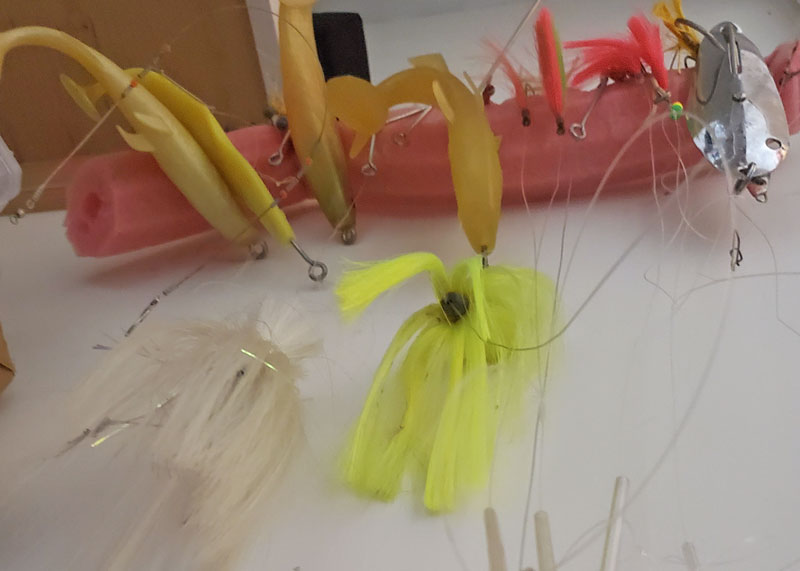
- Un-coil pre-tied leaders and hang them in a dark, UV-free environment; leave them coiled tightly in a pouch or binder and they’ll be wound up as tight as a Slinky come spring. A great way to prevent this is to mount a pool noodle as high as possible in a closet, plant the rig’s hook(s) in it, and let the leader hang loosely. Next spring you can repackage it and it’ll have far less memory when you break that leader back out.
Yes, we’re just as bummed out as you are by our temporary inability to fish. No, we can’t wait for spring, either. But let’s put the postponement of our piscatorial pursuits to good use by fiddling with our tackle—and soon we’ll be catching more, bigger fish than ever before. (We hope!)
BONUS TIP for fly anglers: Strip the line off your fly reels, and into a bucket of warm, soapy water. Then clean it by pinching with a rag and pulling it through. That will get rid of grime and mineral build-up on the line’s porous surface, which can reduce casting distance and increase weight.