Angling success sometimes comes down to valiantly beating your head against a brick wall. You might not catch a fish in the first three hours of trying, or even the first three days, but if you give it your all for long enough sooner or later you’ll hook up. When I was younger I enjoyed more success than I do in this day and age, in part because I wouldn’t hesitate to fish from sunup to sundown (whether it was necessary to be successful, or not). These days I run out of steam sooner. I also tend to fish closer to home and do a lot less traveling to go where the bite’s hot, which is another excellent way to boost your success rate. Recently, however, I was reminded of another key to angling success that I once knew… but I suppose I somehow forgot about through the years.
This spring a subscriber emailed me regular reports as he fished one of the Western Shore rivers targeting stripers. He had solid success for several trips in a row, then had a slow one, then the fish disappeared from the area completely. I was seeing the same pattern at the same time on my home water, the South River. When he stopped catching fish I stopped catching fish, too.
I had very slow or skunk trips three or four times in a row after that. But he started sending in very, very different reports. He enjoyed a day of smashing smallmouth, catching sunfish, and chasing snakeheads. As we corresponded, I told him I was glad he was bending a rod—while I was busy spinning my wheels.
Suddenly, I had an epiphany: living here in Bay country we have such vastly diverse fisheries at our fingertips that when one type of fishing slacks off, you can shift gears entirely and just go do something different with a great chance of success. I don’t mean swapping up tactics or hotspots, I mean targeting a completely different type of fishery. Wait a sec—I already knew that! Or, at least I used to keep it in mind a lot more, and after a slow trip or two I’d change my focus entirely.
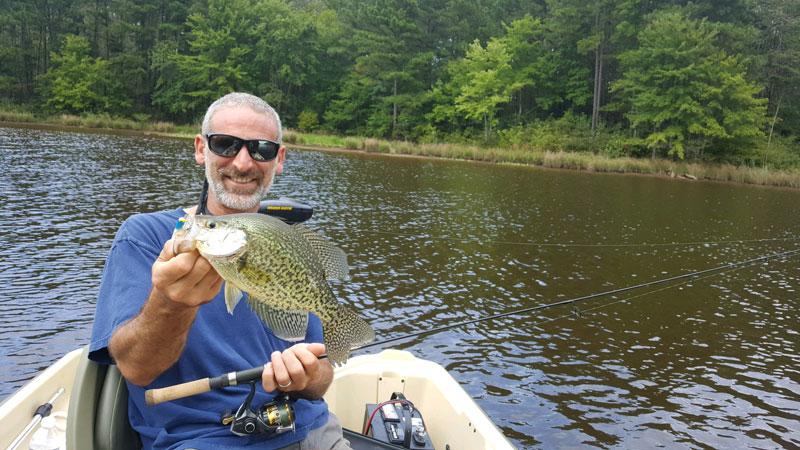
Reminded of this opportunity, on the next trip I traded in my jigs and plugs for bottom rigs and a bag of bloodworms. Instead of running to the usual places I simply parked the boat over an oyster bar, lowered away, and watched as the people I had brought out laughed and giggled at one spot and croaker after the next. Two days later I had time to fish on my own with no commitment to take out anyone else, and rather than do my usual evening casting from the boat in the South River, I went to a local pond and tugged on one crappie after the next. I didn’t see a rockfish on either of those trips, but both of them were great fun.
Don’t let a few hours or even a few days of slow fishing get you down. If you keep trying long enough yes, you will catch fish. But when the bite is tough and you don’t feel like banging your head against that wall anymore, develop a new tactical plan. Change target species, hit some different waterways, and visit somewhere new. One of the blessings of living in Chesapeake country is that there’s always a good bite somewhere, for something—if you simply remind yourself that all those opportunities are out there.