It will come as a shock to exactly no one reading these words right now that striped bass regulations have grown tight in recent years. And that’s generated plenty of angst among recreational anglers of all types, as well as guides and charter captains—who are allegedly regulated as “recreational anglers” even though they often fish under differing regulations. Here’s something else we’re all well aware of: when it comes to Chesapeake Bay fishing those regulations are promulgated and enforced by the Department of Natural Resources (DNR) in Maryland, the Potomac River Fisheries Commission (PRFC) in the tidal Potomac River, and the Virginia Marine Resources Commission (VMRC), in Virginia, under guidelines set by the Atlantic States Marine Fisheries Commission. Love it or hate it, that’s how our regulatory system works. And one thing I’ve noticed at public meetings and in feedback we’ve received from our readers is that there’s very little love and more than a little hate in the relationship.
This is a shame, and it only serves against our interests. At a meeting regarding the proposal to shift the striped bass season baseline in Maryland late last year, a very well-spoken and intelligent commercial fisherman stood up and made the point that all of the tightening rules and regulations didn’t amount to squat as far as saving the fishery goes, when the water quality and habitat in our Bay and tributaries are so degraded that the fish can’t thrive in them. The crowd roared with agreement including recreational anglers, guides and charter, and commercial fishermen. This issue, we can all agree on. But blaming the regulators doesn’t help one bit, because they aren’t the ones responsible for maintaining water quality.
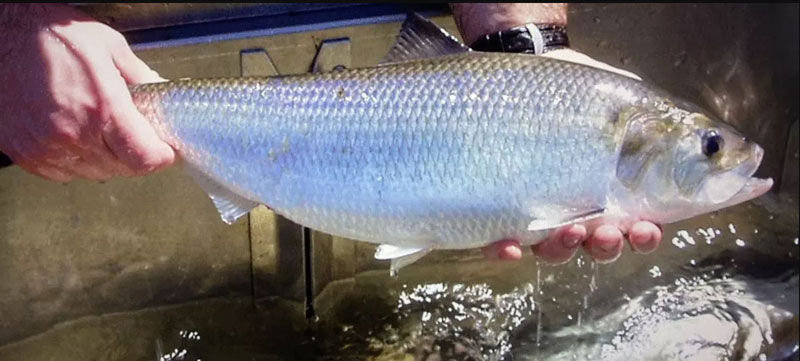
It should be apparent to anyone paying attention that in the modern age, where factory-level mega-harvest on the commercial side isn’t a danger for Bay species—excepting menhaden, of course—spawning success has a far more dramatic impact on the number of fish out there than our regulations do. American shad provide an illuminating example. The population crashed in the 1970s and in 1980 a moratorium was placed on harvest in Maryland. Not only did we stop yanking them out of the water, we also started putting them back in. In fact, the state stocked over 50 million American shad in various waterways feeding the Bay. The net result? Populations increased from virtually nonexistent to merely pitiful through 2001, declined from there through 2007, and after 39 years of zero harvest, in 2019 this population was described by the DNR as “likely near historic lows.”
Rockfish aren’t very different. The moratorium surely helped save some fish, but it was a handful of spectacular spawns (1989, 1993, 1996, and 2001) that sent the population through the roof. In more recent years as catch regulations have tightened, conversely, the population of resident striped bass has steadily dropped. The crux of the problem is reproduction, not overharvest.
“Overharvest” is a relative term, and what amounts to overharvest changes year by year as the population shrinks. The DNR and its regulating brethren are charged with preventing overharvest, so they react to changes in fish populations by tightening up the regs. We love to hate them and scream as they tighten the screws, but we really shouldn’t blame them for it.
Who does get the blame? In Maryland, the Maryland Department of the Environment (MDE) is responsible for “protecting, managing, and improving Maryland’s water quality,” including “ensuring environmental health.” The MDE issues pollution permits, monitors compliance, and manages wastewater, stormwater, wetlands, and both nontidal and tidal waterways. In Virginia, the Virginia Department of Environmental Quality (DEQ) is responsible for “administering state laws and regulations to improve and protect Virginia’s streams, rivers, bays, wetlands, and ground water for aquatic life, human health, and other beneficial water uses.”
Is there anyone out there who’d like to argue that water quality conditions are “environmentally healthy” in Maryland, or that aquatic life is adequately “protected” from the environmental standpoint in Virginia?
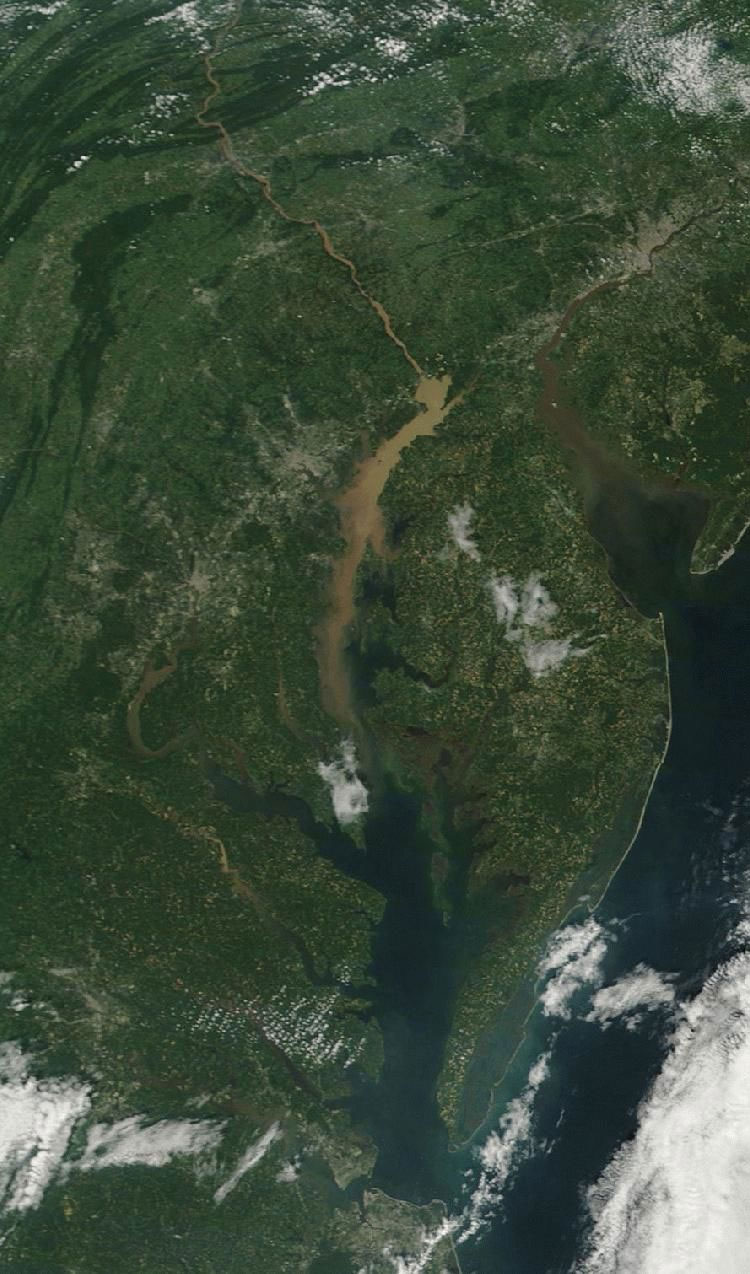
If we anglers are aggravated by watching one species after the next crash beyond our ability to fish for them, wouldn’t those agencies charged with protecting the environmental health of our rivers, streams, and bays be the ones we deem culpable? Wouldn’t the little bit of public pressure we can apply as citizens be better directed at protecting and improving the aquatic environment, as opposed to fighting over the table scraps of a tiny harvest that fisheries regulators have determined is allowable?
We must recognize that progress is necessary for our economies and our society, and that progress often has negative impacts on the environment. The MDE and DEQ are undoubtedly in a never-ending tug-of-war between progress and protection. But when 39 years of moratorium fails to restore a species’ population, when ratcheting regulations tighter and tighter on another species has zero positive effect, we should recognize that the pendulum may have swung too far in the wrong direction.
So, what are we to do? We all have full-time jobs already, and none of us can be expected to endlessly write letters, go to permit hearings, and otherwise fight to push the pendulum back where it belongs. But our society long ago recognized this fact of life, and that’s why people create organizations we can enlist to help do our bidding. We’ve tried to point out, time and time again, the intersection of interests between Bay anglers and the Coastal Conservation Association (CCA). If you’ve joined, I sincerely thank you for helping to support what you and I both believe in: better habitat, more fish, and more access for recreational anglers to the fish that are out there. If you haven’t heard about CCA as of yet I strongly urge you to find out what they’re all about and join. And if you’ve heard about the organization and agree with its mission “to conserve, promote, and enhance the present and future availability of coastal resources for the benefit and enjoyment of the general public,” but haven’t joined, I ask you to do so now. Consider this: the cost of joining CCA is $40, hardly more than a bag of bloodworms and far less than you spent the last time you filled up the fuel tank on your way to go fishing.
But that’s not enough. I firmly believe that Bay anglers, one and all, should also be members of the Chesapeake Bay Foundation (CBF). Sure, there will be times when this organization might be in favor of tighter catch restrictions, but that only occurs after a population’s numbers have plummeted—and no other organization has done more to help prevent the Bay’s populations from plummeting in the first place. And there’s more: join your local tributary’s Riverkeeper Federation and/or Waterkeeper Alliance. While CCA works on a state-wide basis and the Chesapeake Bay Foundation looks at issues on a Bay-wide scale, the Riverkeepers work on a more granular level. They give their undivided attention to specific rivers like the Susquehanna, the James, and many more.
Does it sound like this could get expensive? Not really. I’m far from wealthy but I’m a member and/or donor to all of these organizations: CCA, CBF, and the Arundel Rivers Federation (which keeps watch over my home river, the South). All that totals up to around $100 a year—which I’ll bet is a lot less than you spent the last time you bought a rod and reel. You could join all three in the next 15 minutes. And I absolutely, positively guarantee that supporting these organizations is a much more effective use of your time and effort than complaining about the DNR, PRFC, or VMRC.