Although hook and line aren’t involved, many anglers willing to try a wade fishing of sorts do attempt to catch crayfish at one time or another. They’re a topnotch bait for many different species and many of we humanoids enjoy eating them, too. Plus, lucky for us, here in the Mid-Atlantic area just about any stream or river wide enough you can’t jump across it is bound to be full of these small freshwater lobster-like critters.
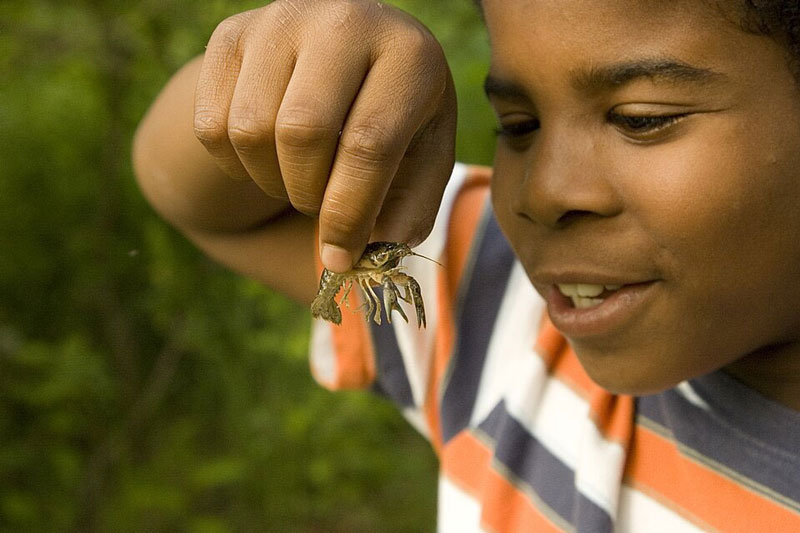
What are Crayfish
Crayfish—or crawdads or crawfish as they’re known to our south—are indeed freshwater lobster. What will be of primary interest to we anglers, however, is that they’re also a favorite food of largemouth and smallmouth bass, and in many riverine environments where smallmouth dwell they may even be the primary food source. They’re also common in many freshwater bodies where species reservoir perch and crappie enjoy munching upon them as well. Fish absolutely love eating them, and at many times in many places, crayfish will out-catch any other bait or lure.
How to Catch Crayfish
The best way to catch crayfish is to put on a bathing suit, grab a dip net, and wade into a knee-deep pool in a river or stream. Crayfish tend to congregate in the slow-moving pools where they'll generally be hiding under rocks. Take a few slow strides through the pool and if good numbers are around you’ll see them shooting off in unpredictable directions. You can try scooping at them as they dart past, and we wish you the best of luck. After missing nine out of 10, lunging off-balance, throwing water in every direction, stirring up mud until visibility goes to nil, and in all probability falling into the water, we hope you’ll try a completely different tactic.
The best way to catch these critters is usually to let them get out that initial burst of energy as they dart off, but keep an eye on where they go and look at what direction they’re facing when they stop. When crayfish dart off with a quick pump of that tail they go backwards, so when you see which way it’s facing, you always know which way it will go when it tries to scoot away.
Delightfully, crayfish don’t have eyes in the back of their head. So if you can maneuver your net behind the crayfish and plant its flat head along the bottom, then scare the critter into trying to dart away with a wave of your hand or foot, the crayfish will essentially net itself. The trick is to get close enough to slide your net into position before the crayfish bugs out, which will sometimes mean making multiple approaches and follows if the crayfish is feeling cagey that day.
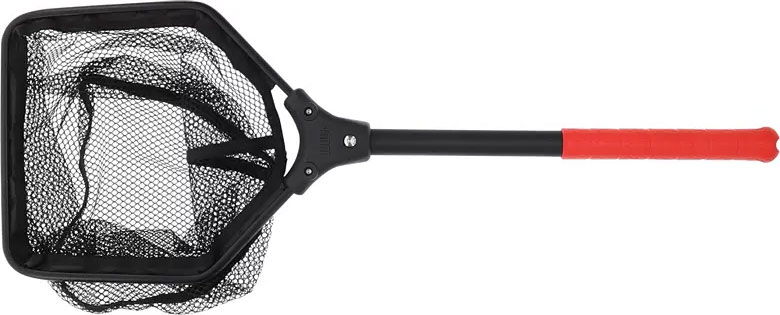
But before we get to the catching, we need to consider that net: it needs to have a flat hoop, not rounded (those are for butterflies). The head should be at least six inches across and a foot is better, with a handle three or four feet long.
Once you’ve started collecting these critters, remember that just like a fish they need oxygen to breathe. Put more than a couple in a minnow bucket for more than a few minutes and you’ll need to add an aerator. Or, you can keep crayfish alive for a while out of the water, more or less like a crab. Just ensure that they’re kept cool and out of the sun.
How to Fish with Crayfish
You’ll have a tough time finding a freshwater fish that doesn’t enjoy munching on crayfish, but need to consider your target species when deciding how to best offer up the bait. The big question is whether to fish it live and whole, or to rip off the tail and use that for your bait. As one would expect live is often best for larger predators, but smaller species like bluegill, yellow perch, and crappie can’t take on a large live crayfish and its claws. So, for these fish you’ll usually do a lot more catching if you yank that tail off and fish it without the head and body. The tail has the most tempting chunk of meat anyway, and it’s easy to thread onto the hook by going in through the meat then out by the tail fins. Just about any fish in the water will go after it with abandon.
When fishing the crayfish whole for large predators, sending your hook in through the underside of the tail and out through the back of the tail is an excellent method. You can try drifting a crayfish in the current unweighted, add a slit-shot a foot or two up to keep it near bottom, hang it just above bottom on a drop-shot, or suspend it beneath a bobber. All of these methods can be incredibly effective depending on where and how deep the fish are holding.
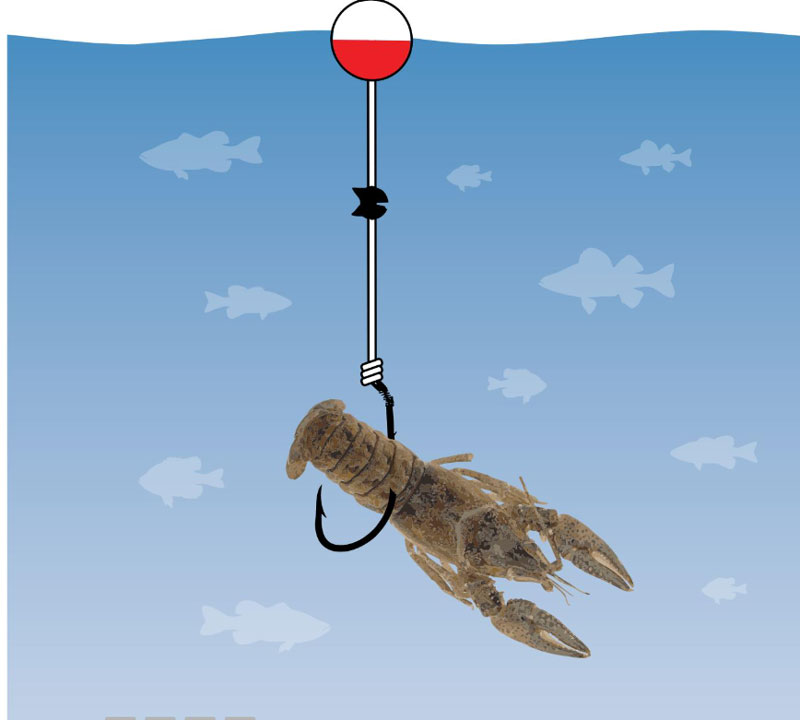
TIP: In rocky areas it’s usually best to keep the crayfish at least a few inches off bottom or to continually move the bait. Otherwise, within a minute or two they’ll usually crawl underneath a rock to hide from the fish.
You may have heard that fish love eating crayfish, and sometimes using these guys for bait works like magic. Well, you heard right. So put on a bathing suit and wade right into that river. Heck, there’s a very good chance you’ll have just as much fun catching crayfish as you do when you’re catching the fish that eat them.
Bring on the Crayfish Boil
If you really focus on it and spend the better part of a day targeting crayfish you may be able to fill a bucket and use them for a boil instead of for bait. Though the species we have here (over a dozen slightly different kinds live in the Mid-Atlantic region) look a little different than the red swamp crayfish farmed in southern states, most people would have a hard time differentiating the taste. Zatarain’s Crawfish, Shrimp, & Crab Boil is our top pick.