My first trip offshore out of Ocean City nearly ended before it began. The boat wasn’t a mile out of the inlet when the first twinge of queasiness awoke my insides. Panic soon followed.
What have you done? I thought to myself. You’re now stuck on a boat, likely for 10 or more hours, and sick as a dog. This is going to suck.
But it did not suck. As I stared at the horizon, eyes locked on a focal point to match the motion of my body, I forced myself into an alternative train of thought. You are a fisherman, I told myself. Fishermen do not get seasick. As silly as it sounds, I repeated these words to myself over and over in my head for the next hour. By the time we pulled up to the first lobster ball and saw mahi-mahi zipping about, all feelings of nausea evaporated. And no, it’s not because fishermen don’t ever get seasick. It’s because I distracted myself. And soon a buddy of mine was getting sick over the side while I was bailing mahi one after the next. I’m sure you can guess which one of us was having a better time.
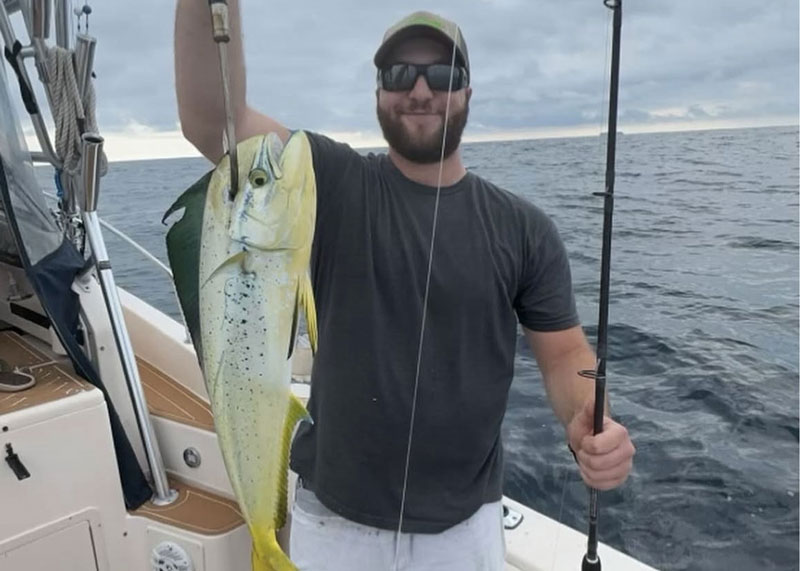
This brings us to our first “rule” for your first time fishing offshore: try to prevent seasickness. It’s not as easy as it sounds, I know. I’ve learned through experience that often it’s a pair of mental handcuffs that makes you and keeps you sick. Break free of the imaginary binds, and most of the time, you’re home free. That being said, here are some physical methods—both preventative and retroactive—which I’ve used myself that have saved me more than once when I’m truly nauseated and not just sick in my own head.
- Be sure to take motion sickness medicine the night before and morning of, and bring it with you on the boat. Even if you’ve never been seasick, carsick, or experienced any other form of vehicle-induced nausea, take the pills. It’s always better to be safe than sorry. Dramamine and Bonine are great options. If they make you too drowsy (a common side effect), you can opt for a Scopolamine patch that goes behind your ear the night before, but be careful. This product can interfere with certain prescription medications, so read your labels. There are some other options, like Relief Bands, that different people find effective.
- Make sure you hydrate and eat a hearty meal the night before and a good (but not too greasy) breakfast the morning of.
- Don’t go out drinking the night before a trip and especially don’t stay out late drinking. Waking up even slightly hungover is a surefire way to get yourself seasick.
- If you feel nausea coming on get outside of the cabin and stare at a distant point on the horizon. For whatever reason, being inside a cabin turns many people green.
- If you’re stricken let it all out—many people feel a lot better after chumming the waters. After that drink only water and eat a few crackers, a small piece of bread, or another neutral tasteless item or two, and hopefully you’ll have a quick recovery.
After we had filled our box with mahi, it was time to set out our trolling spread. We’d heard of white marlin being released left and right out in the canyons, so that was our target. It wasn’t 10 minutes before a billed beast blasted out of the water behind the boat. The line ripped out of the port outrigger and started screaming off the reel.
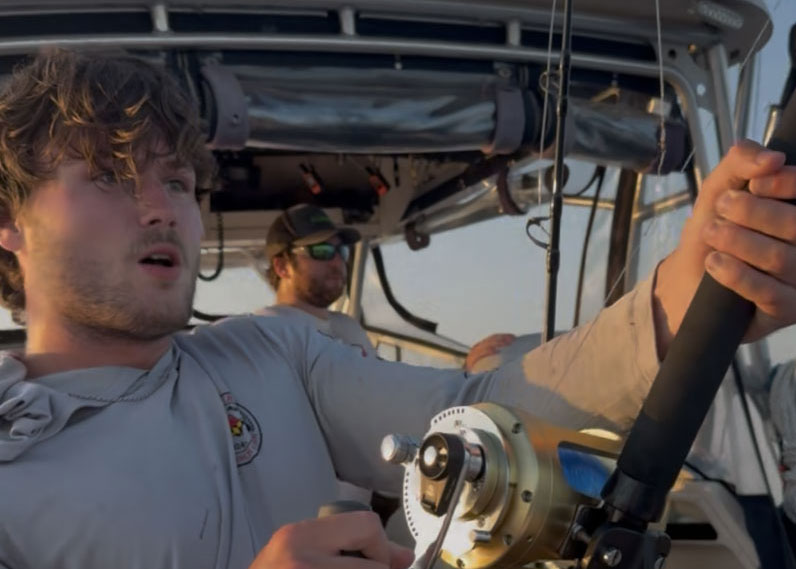
Organized chaos ensued, with my friend and captain for the day shouting orders to crank in the other rods and grab the fighting belt. One buddy strapped me into the fighting belt and I began doing battle with the marlin. The next crewmember scrambled to get the rest of our spread cleared. Another guy slid into gloves in preparation to leader the fish. And finally, we had our cameraman to capture the memories.
If you hadn’t guessed yet, our next rule is: be a team player. Offshore fishing is a team sport, and it takes every member of the crew to successfully land a pelagic behemoth. One weak link and all heck can break loose very quickly. So, whether you’ve been assigned the role of driving the boat, fighting the fish, assisting the angler, leadering the fish, clearing the spread, or taking videos and photos, embrace your role for the sake of the crew. Don’t be afraid to ask questions, and be willing to learn. Your role will likely rotate throughout the trip, so you’ll get the chance to fight a fish. Just be patient and play your part.
After catching and releasing a few more marlin, we headed back towards dry land. I broke out some hot dogs and drinks to celebrate our epic day. We ate and laughed and recapped our adventure. It was a proud moment to float through the Ocean City inlet and into the marina with our white marlin release flags flying high. Once we pulled the boat, everyone pooled together some cash to give to our friend who owned the boat for gas, ice, bait, and other expenses.
That’s our third rule: don’t show up empty handed. Whether it’s food, drinks, gas money, ice, or anything else that may be of use to your crew, make sure to bring something. A surefire way to never get invited offshore on someone’s boat again is to contribute nothing. Don’t be a freeloader!
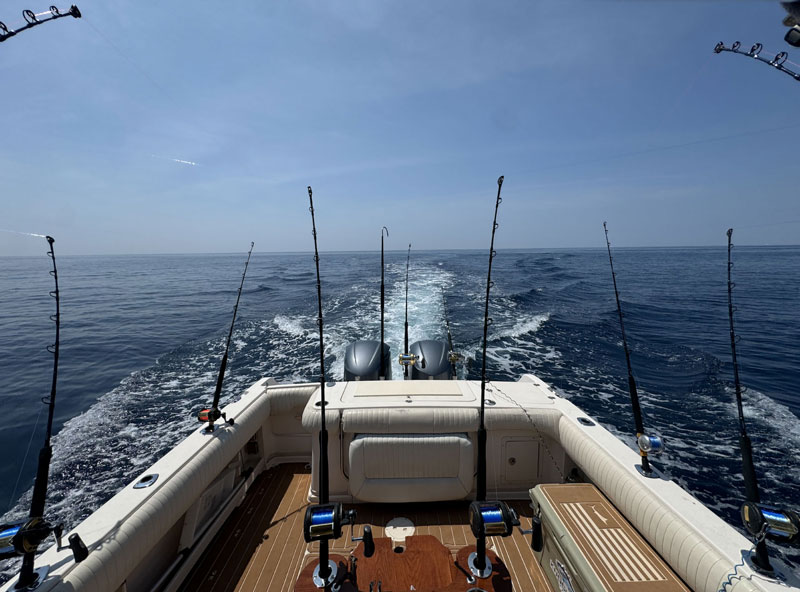
Last but certainly not least, our final rule is: help clean the boat. After all the fish blood, slime, scales, saltwater, ketchup stains, and spilled beverages that covered the deck during your outing, the vessel is going to need a good washdown. It’s not fair to leave this responsibility solely to the boat owner and captain after he worked hard to ensure a safe and enjoyable trip for the crew. Grab a rag and get scrubbing.
These rules are by no means written in stone, nor are they a complete list that covers all the bases for all people all the time. Rather, these unspoken suggestions will allow for maximum fun and comfort on your trip, as well as increase the likelihood that you’ll be invited on another expedition to the canyons. Remember to do everything you can to prevent seasickness, be a team player, show up with something tangible to contribute, and help clean the boat. Follow these rules and your first time offshore will be one for the books.
-By Adam Greenberg