Year after year, decade after decade, anglers in the Middle Bay zone constantly hear about the Stone Rock. It’s one of those “old reliable” hotspots that produces fish on a regular basis throughout the ages. No, the Stone Rock doesn’t hold fish all the time. But looked at over the long haul it certainly ranks among the top few areas to look for those finned critters.

The Stone Rock is an area of bottom to the west of Sharps Island shoal, where the island’s underwater remnants drop off into the channel. There’s some debate about the origin of the rocks there, lore being that the palm-sized rounded stones lining the bottom here were ballast dropped overboard to lighten the load of sailing ships before they headed up the tributaries, where reduced draft became a factor. Many scientists, however, say they’re a naturally formed geological feature. Whatever the origin, fish here long enough and sooner or later you’ll snag an oyster shell or mussel attached to one of these rocks, and realize that they support a large area of live bottom. Add to that the fact that the currents flow strongly along some portions of the Stone Rock on both incoming and outgoing tides, often pushing bait up against the edge of the shoal, and it’s easy to understand why fish of all sorts are often found here.
Depending on who you talk to, the Stone Rock has different dimensions. Some people have a single spot in their GPS, and others would consider the entire stretch from the red 80A nun buoy (north of the lighthouse) down to the red 80 channel marker (south-west of the lighthouse) to be part of this hotspot. There’s no rock-solid definition, but this entire zone often does hold fish. And since it’s such a large area, when it does attract fish it often attracts a fleet as well.
Depending on how deep an area you’re in, the bottom is likely covered by oyster, mussels, or both, from about 15’ down to 25’ or 30’. The most productive zone(s) on any given day can be anywhere in this depth range, usually right along the craggy drop-off but also outside of it sometimes when bait gets swept along by the currents and concentrated somewhere near the edge—especially if bluefish and/or Spanish mackerel are in town.

Spring at the Stone Rock
Historically the Stone Rock enjoyed a reliable and often-epic spring black drum bite. From the second half of May through mid to late June massive beasts would form up in schools and patrol up and down the edges, and catching multiple fish from 30- to 80-pounds in a day was common. That run was among the most reliable in the Middle Bay until 2010 or so, but after that slowly petered out to nothing and hasn’t made the headlines since.
During the same timeframe it wasn’t unusual to find flounder along this edge. They weren’t usually present in big numbers but they were big fish, sometimes stretching to 24-plus inches. Stripers did and still do sometimes school up along the edge during the spring months. And although this is another bite that’s been less impressive in recent years, croaker sometimes move in along the shallower areas of the shoal edge and set up shop. The Stone Rock is a zone where an early push of bluefish often moves through, too. Many seasons, including just last year, it’s one of the first Middle Bay spots to find those early-bird blues. Like the flounder, their numbers usually aren’t great compared to later in the season but the quality of the fish is often better than expected.
Summer at the Stone Rock
When the waters warm up all bets are off as to what species you might find here. July and later sometimes brings a long-term invasion of Spanish mackerel, bluefish, or a combination of these species chewing on glass minnow and/or bunker. The action could last an afternoon, or it can provide steady action until the waters begin cooling off as fall hits.
Mid-summer this spot sometimes sees a run of the Middle-Bay’s heaviest-hitting fish, as well. Cobia and bull drum can show up here, usually in August though both July and September offer some possibilities. Again, the action might be short-lived, but it might also last for a few weeks. Bottom fishing is often productive at the Stone Rock during the summer months, too.
Fall at the Stone Rock
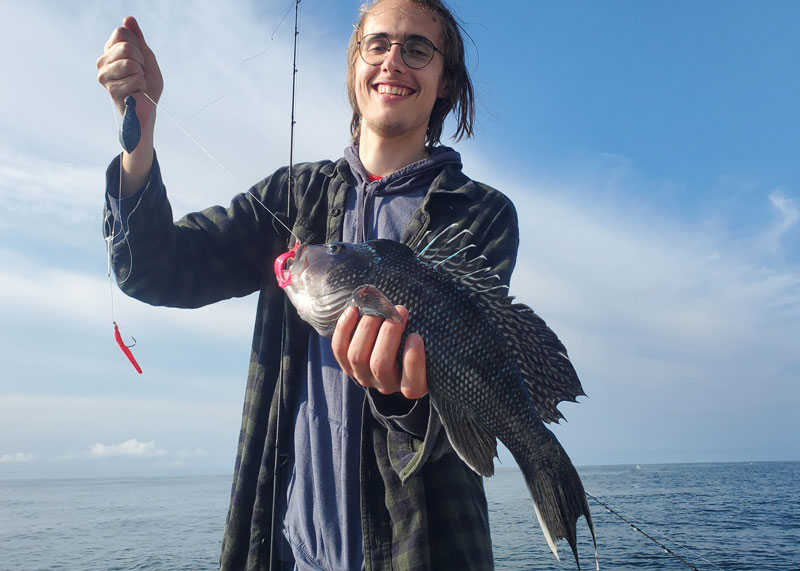
Fall is when we look forward to those bird shows, and this is a good place to find them many seasons. It’s also when black sea bass sometimes start popping up, and in some years that’s included a surprising number of keepers. Although some recent seasons have been a bit of a disappointment in that regard there’s no telling what we’ll see here next fall, and often when the sea bass do make a showing they’ll be biting well into December.
The Stone Rock by Species & Tactics
Though any form of fishing could prove productive at the Stone Rock, as the species and the seasons change the most effective way to fish here is constantly changing. Here are some top ways to target the different fish found prowling the area.
- Black Drum – If this run sees a revival we can expect the traditional tactic—meander the edges until you find fish on your meter then drop half a soft crab on top of their heads—to work.
- Bottom Fish, Flounder and Sea Bass – Drift fishing or anchoring/Spot Locking over a specific spot and dropping bait is often the way to go. Note that when drift fishing here snags are very common, so many anglers choose to fish from a static position. Bloodworms are generally best for bottom fishing, live minnow or jigging plastics are good offerings for flounder, and sea bass often strike small but heavy jigging spoons tipped with a Fishbites (shrimp and crab flavors work great for this) or squid bits.
- Blues and Spanish Mackerel – If the fish are up top and busting the surface, light-tackle casting with just about any tooth-proof offering can be awesome. When they remain hidden from view trolling is the go-to method. Stick with #1 planers unless you stay away from the shallower zones (even these will start banging bottom if you get shallower than 15’ or so) trailing small spoons in gold, silver, or matte (when it’s overcast or low-light) finishes. Surgical hoses don’t usually draw strikes from mackerel but the blues love them and if any cobia are around they’ll smack them too, so at times these belong in the spread as well.
- Cobia and Redfish – These fish are more often a surprise bonus than a target species here, picked up while trolling. However, if bait stacks up and toothy fish start smashing it when these species are in the area, jigging below the fray can result in epic hook-ups. Sometimes sharpies who anchor up right on top of a productive edge get them while dropping live spot or half a crab, too.
- Rockfish – When rock school up here pretty much any of the above tactics can work. If the fish are concentrated in one area jigging is a good move, but when they’re scattered trolling is the go-to. And if they’re up top, toss anything in the tacklebox and hold on tight.
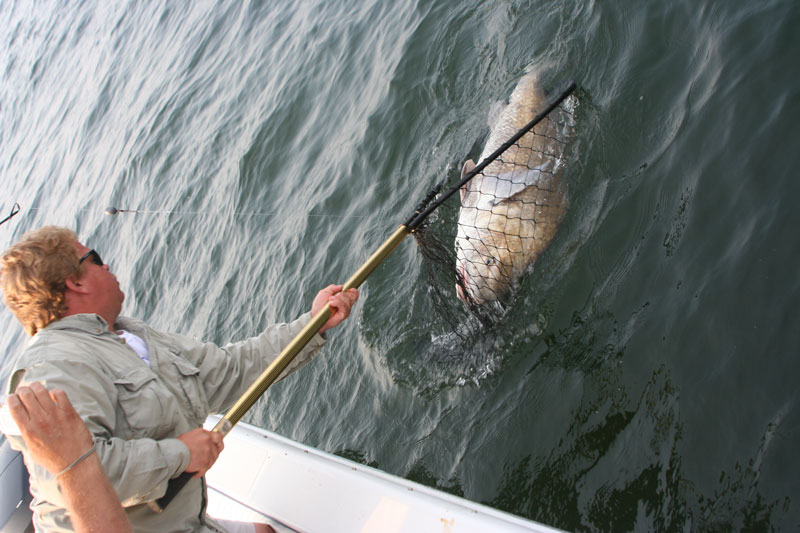
Of course, plenty of other species will show up here. In the past couple few years at different times there have been loads of lizard fish and reams of ribbonfish. Weakfish have been reeled to the boat, a kingfish or two has been caught, and we even had an (unconfirmed) report of a sheepshead showing up here. As is true of many Chesapeake Bay hotspots, you just never know what will appear at the Stone Rock. Unlike many other Chesapeake Bay hotspots, however, there’s something to catch here most of the season, one year after the next.