Lower Bay Fishing Reports
Lower Chesapeake Bay Fishing Report, October 16 Update:
The Lower Bay is transitioning into its fall pattern, with rockfish becoming more active in the shallows and scattered schools beginning to feed on bait. Speckled trout remain plentiful throughout the tidal rivers, although most are undersized, while big bluefish are still hanging around the Middle Grounds and should begin disappearing as water temperatures continue to fall.
The Tackle Box reported an uptick in rockfish action in the shallows of the Potomac this week and says their crew had a great day casting blue-back Bomber Wind Cheaters to the rocks at Ragged Point. There were also some up-and-down breaking fish popping up just to the south of the point but it was a smaller class of fish. FishTalk contributor Eric Packard checked in with a few reports from the Lower Bay this week. Early in the week, he fished Point Lookout, catching six striped bass out near the lighthouse. Two of the fish were in the slot and the others were under the slot caught on a ⅜ ounce Hard head Custom Baits shad head jig with a four-inch pearl colored plastic. Packard also said he caught a “giant and pi**ed-off puffer fish”. He returned later in the week and caught two more striped bass and 10 dink trout in an hour and a half.
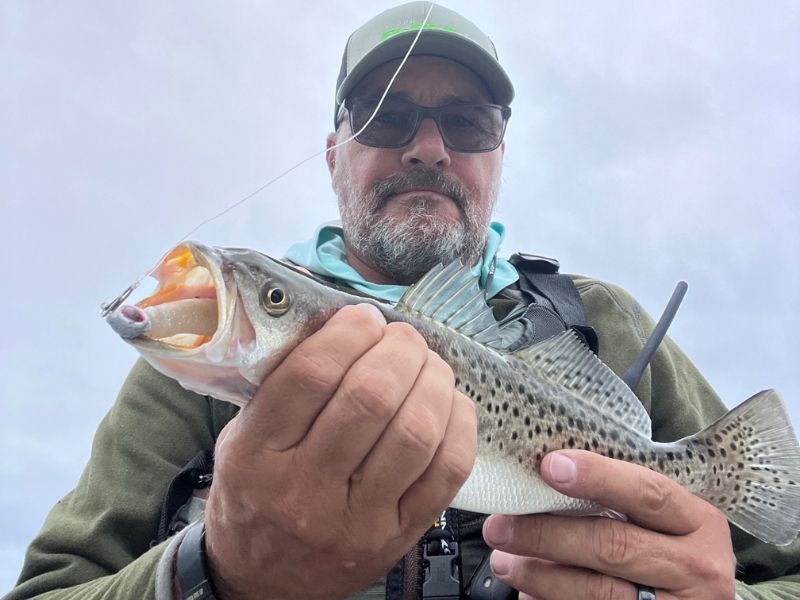
The small trout are still being caught throughout the tidal rivers of the Lower Bay, including the Potomac, Rappahannock, Corrotoman, Piankatank, York, and James Rivers. The bulk of these fish are still under the legal minimum size of 14”, but there are also some keepers around too. Anglers have reported undersized to keeper ratios anywhere from one in 10 to one in 20, but the overall catch rates are very good. Shallow grass flats have been particularly productive, which can be found in most of the lower sections of the Virginia tidal rivers. Small soft plastic paddletails and popping corks with shrimp baits have been particularly effective. There are also still some shrimp around the marshy areas of the Lower Bay, so you may be able to use a cast net to catch some fresh shrimp for bait, which can be a golden ticket for producing bites this time of year. We heard a report from an angler fishing on the Rappahannock who caught a few dozen speckled trout up to 22” this week, though most of the fish were undersized. They also caught stripers up to 20”, so there are some keeper fish around for the fall season.
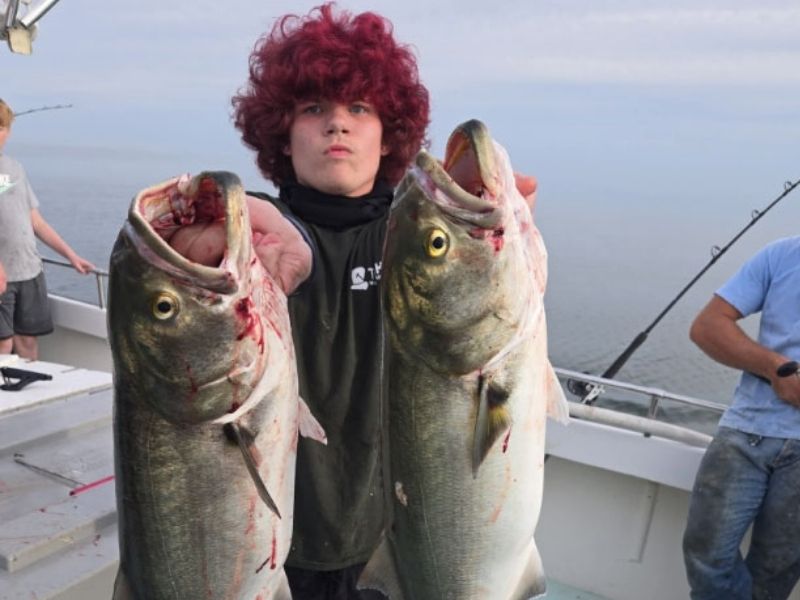
The Tackle Box also reports that big bluefish haven’t cleared out of town just yet. Anglers trolling at the Middle Grounds were scoring on blues in the six-to-eight-pound range, mostly on spoons and surgical hoses. The cold front coming through this weekend may be the jolt of cold weather needed to send these fish south for the remainder of the year, but they may stick around for a few more weeks. The bluefish are typically gone once water temperatures dip into the low 60s or upper 50s, so we are only a few degrees away from reaching that point. Once the bluefish move out, the open water action will shift to primarily striped bass feeding on bait in open water, which should become a more regular occurrence by the end of the month.
Lower Chesapeake Bay Fishing Report, October 9 Update:
The Lower Bay is loaded with options right now, from strong bottom-fishing opportunities to striped bass, bluefish, and an increasingly interesting speckled trout bite. Rockfish are showing up around structure and in the shallows, while bull red drum are beginning to mix into the action. The trout bite is particularly encouraging, with large numbers of young specks spread throughout the tidal rivers and plenty of shrimp around for them to feed on.
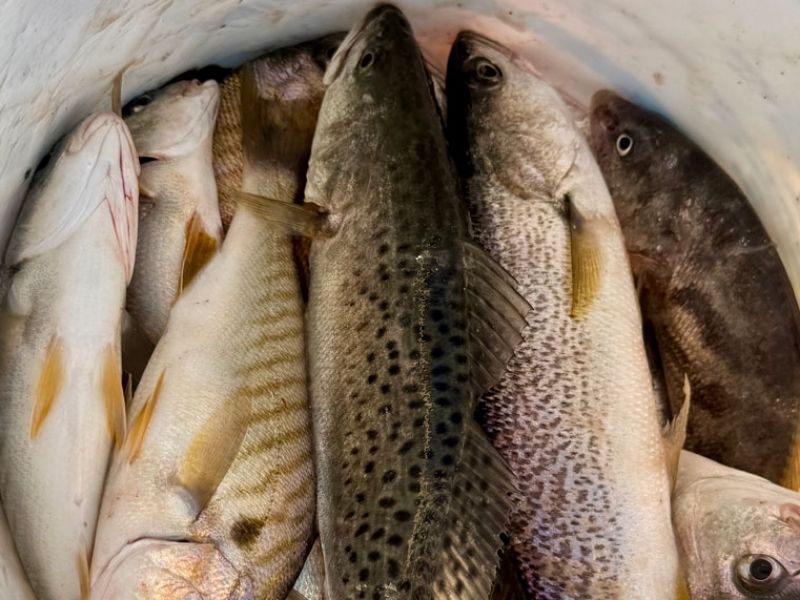
The Tackle Box reports that bottom fishing is terrific, with spot, gray trout, and speckled trout showing up in the mix. A few kingfish are still around as well. Croaker seem to have mostly moved on but a few are still being reeled in. Bloodworms on bottom rigs is the best all-around method of getting them on the line while fishing over oyster bars and hard bottom. They also noted that bluefish are still scattered throughout the Lower Bay and good numbers are running from seven to 10 pounds. Trolling Spoonbrella rigs is their top pick for getting the big blues biting. As for rockfish, The Tackle Box says lure casters are finding them in the shallows, but one of the most consistent zones of action has been in the Potomac below the bridge, around the mouth of Upper Machodoc Creek. Piney Point, Ragged Point, and Kitts point have also been good for the stripers. Open water blitzes have popped up at times, but schools of fish are also hanging around bottom structure throughout the river. We also saw a few reports of bull red drum being caught mixed in with the schools of rockfish. Anglers recalled seeing larger marks on bottom below the school of suspended fish, so keep an eye out for these fish over the next few weeks.
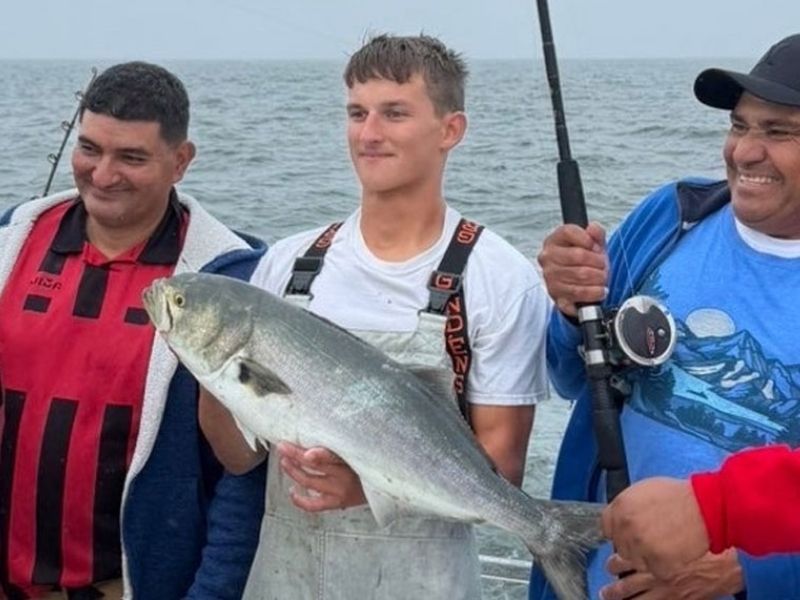
Reports Editor Dillon Waters made a trip down to the Ware River north of Mobjack Bay this past weekend to do some fishing for opening day of rockfish season and look for some shrimp. He spent some time early in the day casting paddletails to docks on the upper section of the river and, after fishing a few docks without a bite, was able to catch a 24” rockfish. He also found a few underslot fish hanging around docks too. There didn't seem to be a rhyme or reason why fish were on certain docks and not others, but the ones holding fish had at least eight feet of water at the ends of them. After boxing a rockfish and releasing a few others, he transitioned to looking for shrimp, which he was able to find in the upper section of the river. The shrimp were hanging along marsh edges and creek mouths. After throwing around a cast net for a few hours, he had about five pounds of shrimp tails on ice. The shrimp will be around for a few more weeks but will begin migrating out of the Bay by the end of the month.
This month is shaping up to provide a “speck”tacular month for trout fishing. Droves of small speckled trout have arrived throughout the Lower Bay. Areas with grass beds have been most productive, and anglers have reported excellent catch numbers from the Potomac River, lower Rappahannock, Mobjack Bay, and lower York River. These areas are also holding some shrimp, so rigging up a popping cork with a soft plastic shrimp bait is a good option right now. The specks are also willing to hit three-inch paddletails retrieved just over the top of SAV grass. A reader fishing near the Whitestone area of the Rappahannock reported catching dozens of trout, but only three were keepers, the rest were between nine and 12”. These fish should be roaming around the shallows until water temperatures drop below the 60 degree mark, so it should be a few more weeks before they move to deeper water.
Lower Chesapeake Bay Fishing Report, October 2 Update:
The Lower Bay is showing plenty of signs that fall has arrived, with cooling water bringing increased activity from speckled trout, striped bass, bluefish, and a variety of bottom species. Speckled trout numbers are particularly notable right now, although most remain on the small side, while the bluefish fishery is hanging on even as the Spanish mackerel appear to have moved on. With clean water, strong currents, and plenty of bait in the tributaries, there is a lot happening down south.
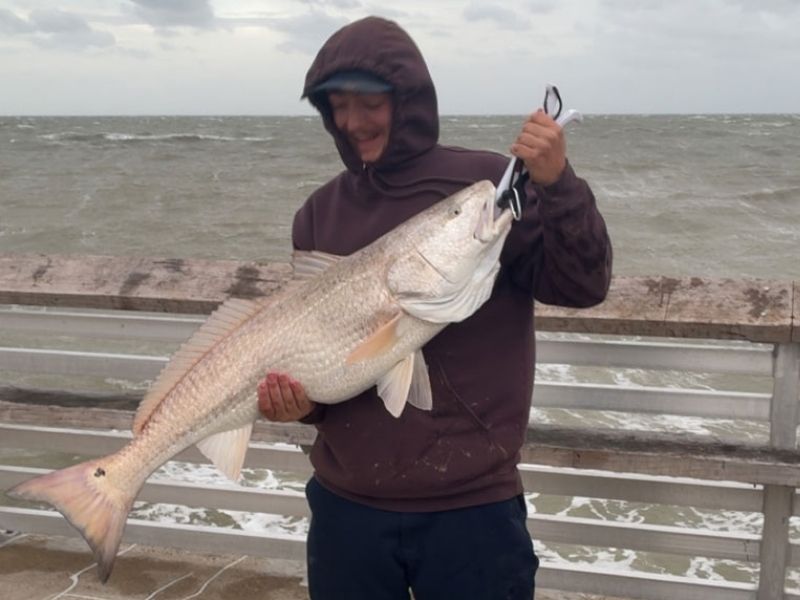
The influx of small speckled trout appears to have weathered the storm and recent catches indicate they’re now even more plentiful. The Tackle Box says anglers in the lower Potomac tributaries were catching them in big numbers, even dozens at a time. The vast majority we’re hearing about have been in the 10” to 12” range, but anglers report constant action on small paddletails and on bottom rigs baited with bloodworm, Fishbites bloodworm, or shrimp cast along the shorelines of the creeks and rivers. Similar reports are coming in from the Rappahannock, where many anglers are reporting dozens of small speckled trout on recent outings. There seems to be a few more keepers in the Virginia tributaries, and we saw some reports of anglers who boxed between one and five keepers, though they had to sort through a bunch of dinks to get there. Rockfish are also more active around docks, creek mouths, and grass beds now that water temperatures are slowly dropping, so Virginia anglers should be able to find some slot-sized fish once the season opens for them on October fourth.
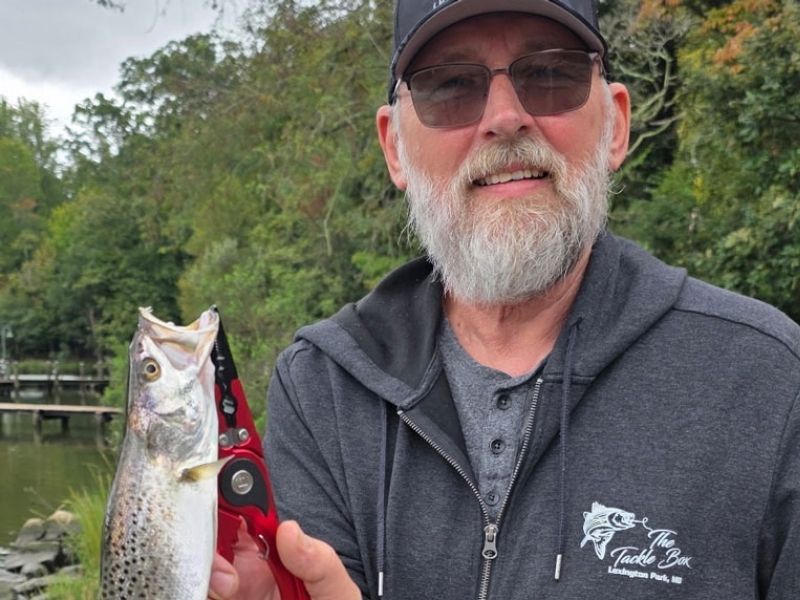
Bottom fishing over oyster bars and live bottom in the lower tribs remains strong and even picked up steam after the storm passed last weekend, with the Tackle Box reporting big spot, keeper croaker, and even some keeper-sized weakfish in the mix early this week in the lower Potomac. Bloodworms on bottom rigs are doing the trick. They also said bluefish remained plentiful, but Spanish mackerel appear to have disappeared for good in this zone of the Bay with the change in the weather. The charter fleet trolling between Point Lookout and the Target Ship had reports of plentiful bluefish in the five-to-10-pound range this week. These bigger blues should be around for a few more weeks, willing to hit spoons or surgical eels on the troll.
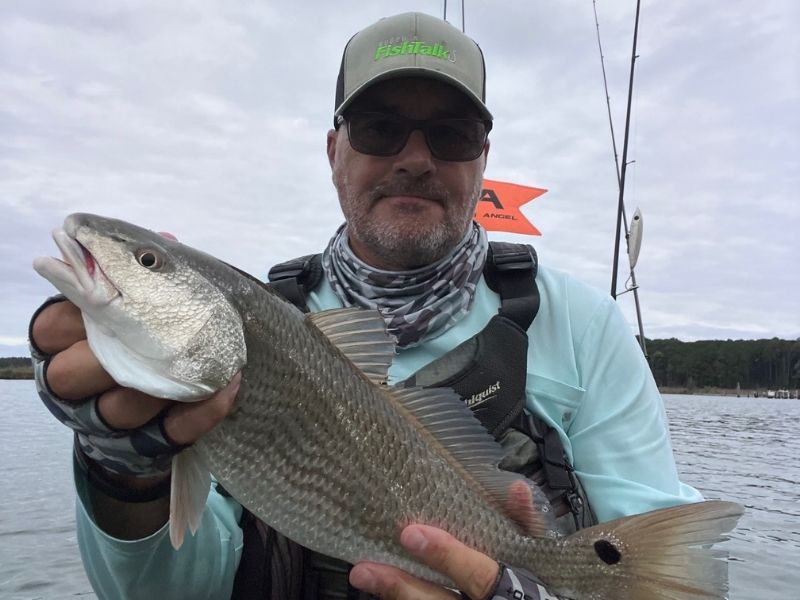
Contributor Eric Packard checked in after a morning fishing around Point Lookout after the weather cleared up this week. He found water temperatures around 68 degrees with clean water and strong currents. He caught six striped bass, four speckled trout (the largest was 20”), one puppy drum, two lizardfish, and a puffer fish. Packard said that the fish were caught between the channel leading to the boat ramp and the rocks out by the lighthouse using half ounce Hardhead Custom Baits Shad Head jigs with various soft plastics. Reports Editor Dillon Waters made it down to the lower Potomac near Smith Creek this week for an afternoon of fishing. He and another angler started out fishing over a grass bed in four feet of water where they found a bunch of small speckled trout. They caught around a dozen specks in the 11” to 13” range and one 16” bluefish. The fish were hitting shrimp soft plastics fished under a popping cork. They then ran to a creek mouth where the outgoing tide had a strong rip coming out of the creek. There they found rockfish, white perch, and small specks waiting to ambush bait. Popping corks and topwater lures were getting hit within a few twitches of the rod tip. Most of the stripers were under slot, but they did catch two slot fish and two overs slot fish up to 26”.