Lower Chesapeake Bay Fishing Report, August 28 Update:
Spanish mackerel are the big story in the Lower Bay, with concentrated schools providing fast action for trollers and light-tackle anglers when conditions cooperate. Bull red drum are also drawing plenty of attention around the Hoopersville to Target Ship area, while bluefish and undersized cobia are adding to the action. Recent trips have shown just how quickly the fishing can change, making this a region where finding the right concentration of bait can pay off big.
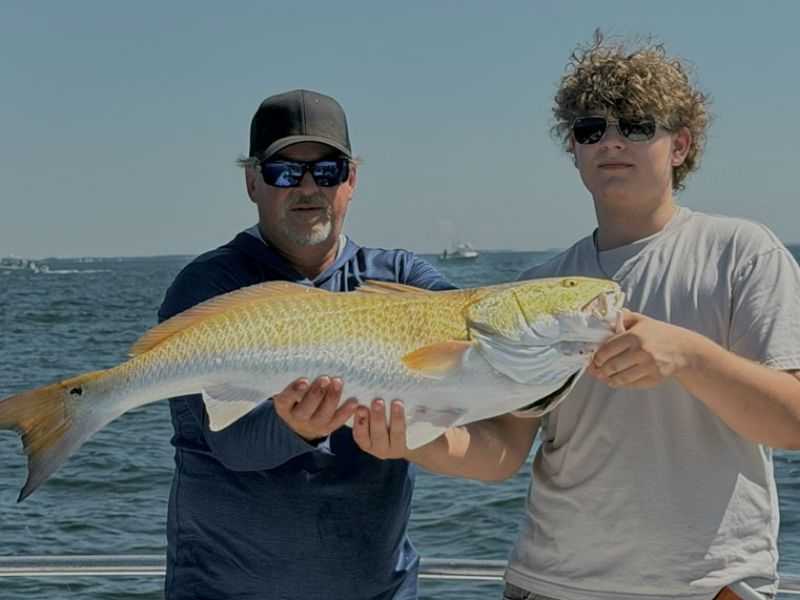
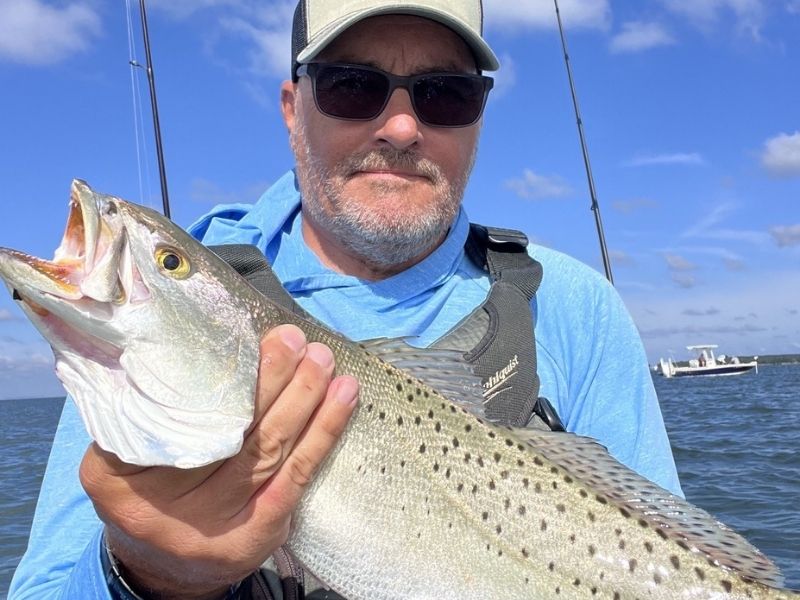
FishTalk contributor Eric Packard checked in with a few reports from the past week fishing near Point Lookout. One day, he fished around Cornfield Harbor looking for speckled trout. The water in the channel coming out of Lake Conoy was dirty, but he did catch a small bluefish there before heading out towards the lighthouse. Once he got there, he spotted some fish milling around and got bit a few times without coming tight. Then, he saw mackerel breaking the surface and hooked up, but the fish pulled the hook. Just as quickly as they showed up, the mackerel vanished. He then caught a 20.5” trout before the tide died along with the bite. He caught the speck on a half-ounce G-Eye Jig with a five-inch Rapala The Mayor soft plastic. He then switched to a tandem setup with two one-eighth ounce jigs and twister tails which caught a few dink bluefish, needlefish, pufferfish, lizardfish, and small flounder. A few days later, Packard returned to PLO, and again fished around Cornfield Harbor. Bluefish were more abundant and decimated his Berkley twister tails and jerk shads, but he also caught another keeper speck. A bit later, he dropped a sabiki rig and found a few pufferfish eager to bite. Bottom fishing in the Lower Bay tidal rivers remains excellent with keeper croaker, jumbo spot, and a plethora of other species providing steady action. More keeper croaker are being caught from fishing piers and shoreline locations, so you don’t have to get out over the oyster bars to catch them. Bloodworms, Fishbites, and lugworms are working best for the hardheads.
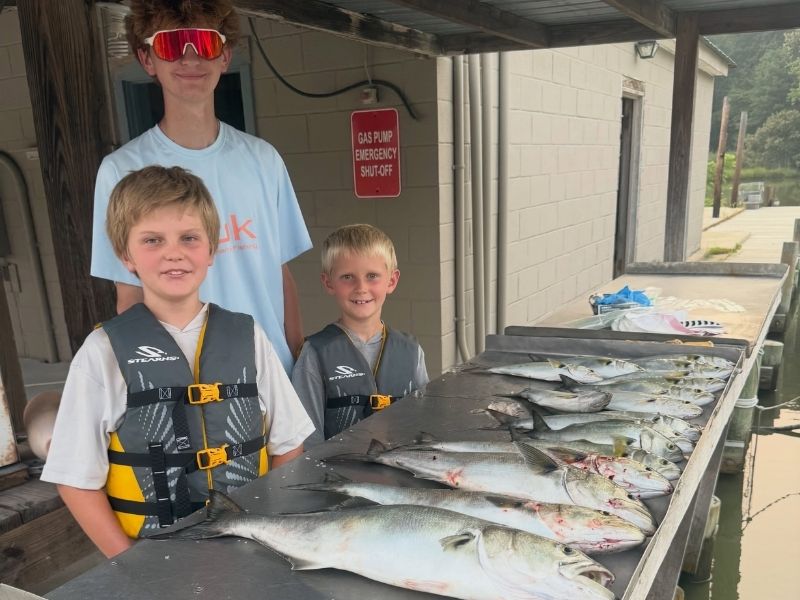
The Tackle Box reports that the Lower Bay is loaded with Spanish mackerel. Several trollers have been able to reach their 15-fish-per-person limit when weather allows. Flashy Drone, Clark, and Hardhead Customs spoons are producing, and concentrated schools can also be targeted with light tackle. The fish are constantly moving, with action reported around the Chinese Muds, the east side drop-off between buoys 77 and 76, throughout the ship channel from the Potomac River to Smith Point, and along the channel edges moving south. Trolling or running and gunning can be effective but when fish aren't in the area you find yourself, moving around and covering water can be key. Bluefish are widespread, with larger schools from the Targets south to Smith Point, while small cobia are mixing in and taking trolled surgical eels. Most of the cobia are under the minimum size of 43 inches, but the shorties are still a lot of fun to catch. Trollers have the best catch rate with the man in the big brown suit as of late, but we have a few reports of light tackle boats catching them as well. The big draw to this zone has been the amazing bull red drum fishing. The bulls have shown themselves mainly from Hoopersville down to the Target Ship. There has been a fleet of light tackle boats searching for them most days, and when one boat hooks up, several others tend to flock to the zone. It’s a running and gunning style of fishing, but the reward of a trophy red drum can be well worth it. The drum are usually willing to hit large soft plastics such as Z-Mans and BKD’s paired with two-ounce jigheads.
Lower Chesapeake Bay Fishing Report, August 21 Update:
Spanish mackerel and bluefish are providing fast-paced action throughout the Lower Bay, with strong reports from the Potomac mouth, Smith Point, Windmill Point, and the Target Ship. Bull red drum are holding along the shipping channel, while steady catches of nine- to 12-inch spot and croaker are making bottom fishing one of the best options for filling the cooler. Anglers should also keep an eye out for areas affected by the reported red tide along the western shore, as discolored, oxygen-depleted water can push fish elsewhere.
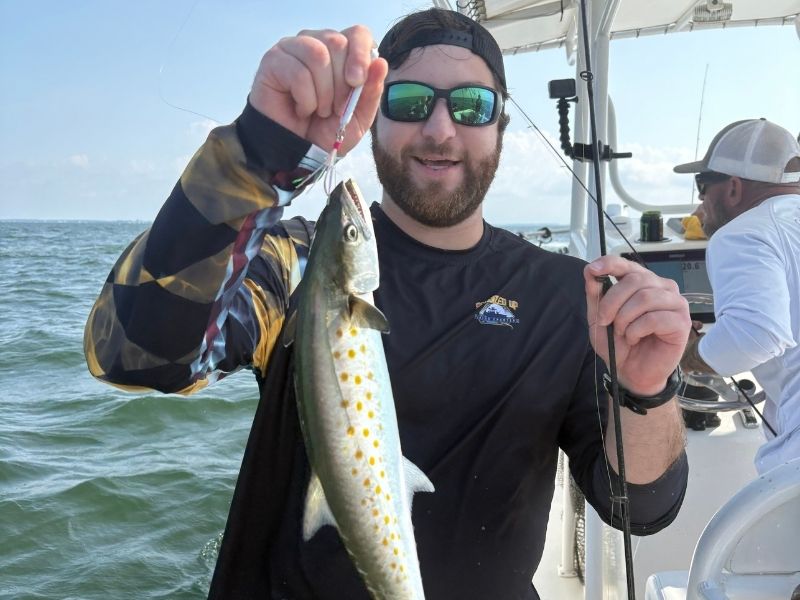
Readers trolling the mouth of the Potomac with spoons behind #1 and #2 planers report a good bite on Spanish mackerel. One checked in with nine fish and another with 14. We also had one report of success casting a Clark Jigging Stick spoon when the fish were visible greyhounding on the surface. The blues and macks have also been popping up around Smith Point, Windmill Point, the Target Ship, and the lumps near Smith and Tangier Island. Some days, the birds give away their location as the fish chase down glass minnows near the surface of the water. When the mackerel are around, you can usually spot them jumping out of the water chasing bait, so keep an eye on the horizon when searching for fish. When casting to the bluefish and mackerel, one ounce rain minnows and metal spoons work well both by casting and reeling in as fast as you can, or by dropping to bottom and vertically jigging. If you hook up on a bluefish, there are usually followers, so have your other anglers ready to pitch to the fish as it comes to the boat. Most of the bluefish are in the two-to-six-pound range, and the mackerel are mostly between 18” and 23”
The bull red drum have been found along the main shipping channel from Buoy 72 in Maryland waters south into Virginia. The best way to locate them is to use side scan and search along the channel edges ranging from depths of 20 to 50 feet of water. This style of fishing is all about covering miles, but the fuel bill is worth it when you stumble across a large school of bull reds. These fish should stick around well until about the middle of September, then they will start heading south, but there are still several weeks of good fishing left. There is also a chance to run across a cobia while searching for the drum, so keep an eye on the surface of the water. Large soft plastics such as Z-Man Diezel Minnowz and BKD’s work well for anglers catching drum. You’ll want to pair the plastics with a two-ounce jighead and use a heavy rod when going to battle against these beasts.
Bottom fishing for croaker and spot on hard bottom in the Western Shore rivers is better than we’ve seen in several years, and although most of the fish aren’t giants, there’s a steady supply of nine- to 12” fish hitting bloodworms, bloodworm Fishbites, and lug worms. A subscriber checked in after fishing the mouth of the Wicomico with steady bites all morning and a cooler full of dinner fish. There have been reports of a significant red tide along the western shore of the Chesapeake Bay in Virginia. We are uncertain of the status of the algae bloom at the moment, but it is something to keep an eye on if you are fishing in this zone. The red tide usually makes the water look a reddish brown color, which is indicative of the rapid growth of microscopic dinoflagellates in the water. This bloom starves the water of oxygen and sends fish fleeing the area. If you run across an area with these signs, it is best to head elsewhere to try and find better water because red tides are never good for fishing.
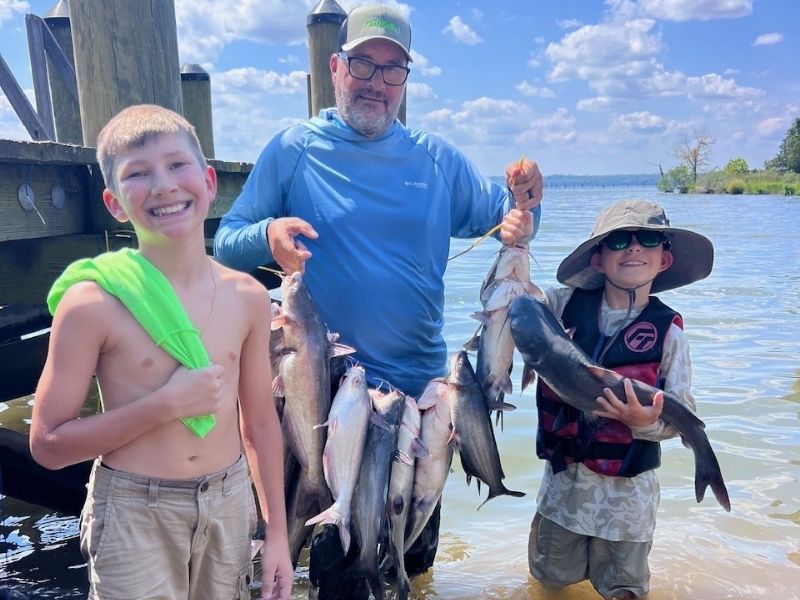
Fishtalk contributor Eric Packard checked in after a day fishing out of Piney Point. He went down searching for red drum and speckled trout but found neither. Instead, he caught bluefish and a few accidental striped bass. The blues were in two different classes, nice keeper-sized snappers, and then smalls. Casting half-ounce jigs with four-inch bass assassin plastics did the trick. He then worked his way down along the Island on the St. George Creek side, casting a topwater, the same lures for the blues, and a smaller 3/16-ounce jighead with a mister twister in pearl. Though he couldn't find any white perch, he caught and released a few striped bass around structure. Later in the week, Packard checked in after a day of jug fishing with a few friends at Mallows Bay on the Potomac River. Their group of eight anglers fished for a few hours in the middle of the day near the ghost ship fleet. The jugs were baited with eel or alewife and the action was swift right from the start. Packard spotted fish on the meter, dropped his first jug, and it immediately took off. Their crew ended up catching 57 blue catfish and a white perch near the wrecks. This style of fishing is a ton of fun, and a great way to remove invasive blue catfish from our waters.
Lower Chesapeake Bay Fishing Report, August 14 Update:
The Lower Bay is loaded with summer species, with bull red drum, Spanish mackerel, bluefish, cobia, spot, and croaker all providing opportunities. Mackerel and blues are spread throughout the shipping channel and are periodically blitzing on the surface, while bull reds are roaming deeper water near the same bait schools and can be targeted with large soft plastics or trolling gear. Cobia remain somewhat inconsistent and mostly undersized, but anglers are expecting more big fish to arrive as the season progresses.
Schools of bull red drum are roaming around the Lower Bay in both Maryland and Virginia waters. These fish aren't easy to track down and are often in depths of around 20 to 50 feet of water. They will occasionally come up to the surface to feed on bait, which turns into an all-out frenzy, but you cannot bet on that to happen while you are out there. If you want to target them, the best bet is to rely on boat electronics such as side scan, which can allow you to cover lots of water in search of the right marks on the screen. The reds have been close to the schools of bluefish and mackerel, so if you can find them, you are likely in the right zone to catch some reds. We saw a few reports of these fish caught in the vicinity of the Target Ship this week, but they move fast and change locations from day to day. Light tackle anglers are catching the bulls on large soft plastics like Z-Man Diezel Minnowz. Trollers are catching them on metal spoons and spoonbrella rigs. The drum will hit the same lures that the mackerel and blues are hitting but make sure to upsize your leader if you want to ensure a big drum doesn't break you off. Cobia reports are still slim, but there are some fish being caught around Smith Point and the Target Ship. Good Stuff Charters has caught several over the past few weeks while taking trips departing from Buzz’s Marina. Most of the cobia being caught are undersized, but we will hopefully see a push of bigger fish over the next few weeks.
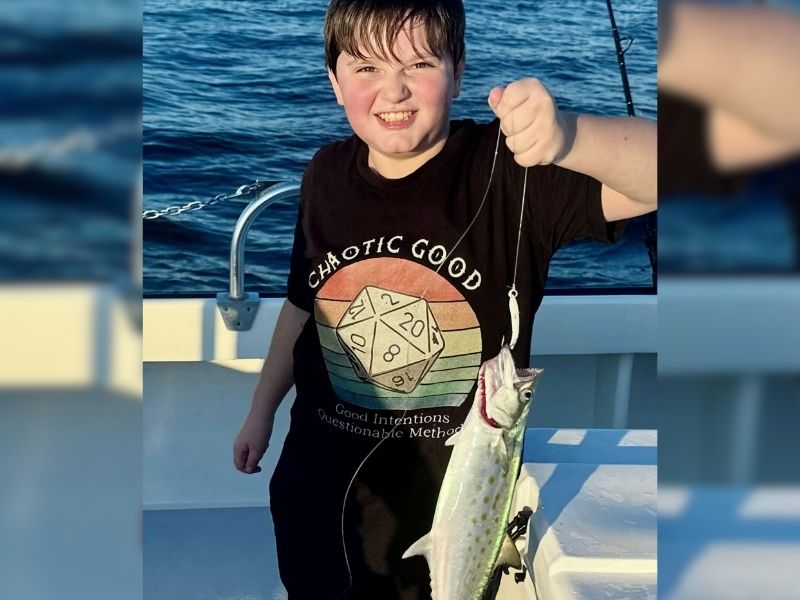
The Tackle Box reports that mackerel have arrived in the Lower Bay in big numbers. Their reports show that fish are scattered up and down the shipping channel in depths of 15 to 40 feet of water. The most productive areas have been from Hooper's Island Light to Buoy 72 in Maryland waters. The western shore channel edges from Point Lookout up to Cedar Point has also been a hotspot. Down in Virginia, Smith Point and Windmill Point are two hotspots that anglers have been catching plenty of mackerel around. On calm wind days, the blues and mackerel have been coming up and blitzing periodically, so keep an eye out for bird action or splashing water. A pair of binoculars come in handy this time of year. Light tackle anglers are casting bite-proof soft plastics for the bluefish and a mix of Gotcha plugs and metal jigs when mackerel are present with the bluefish. Trollers are finding success pulling Drone and Clark spoons behind number one and two planers at speeds of five to seven knots. The faster trolling speeds tend to lead to a better hookup ration on mackerel when they are mixed in with the blues. The bluefish and mackerel should stick around well into September as long as the weather stays warm.
The bottom fishing is still going strong right now with plenty of jumbo spot around and good numbers of keeper croaker. The spot are up to 10 inches, which are plenty big to fillet and eat. The keeper croaker have ranged from nine inches up to 13 inches, which are also big enough to get a good fillet off. Bloodworms are working best but are expensive and get worked through quickly. Bloodworm-flavored Fishbites are a great alternative that hold up much longer. Other alternatives include lugworms, red worms, shrimp, squid, and peeler crab. Around reefs and other bottom structures, black drum, red drum, and some sheepshead have been around. Last weekend, an angler fishing inside the Rappahannock encountered eating-sized drum and some sheepshead while fishing over bottom structure north of Grey’s Point. These fish should stick around into October as long as we can keep mild temperatures around into the fall.
Lower Chesapeake Bay Fishing Report, August 7 Update:
The Lower Bay is offering some of the most diverse action on the Chesapeake, with bull red drum, bluefish, Spanish mackerel, cobia, and speckled trout all available. Bull reds are roaming channel edges and shoals, while bluefish and mackerel are providing dependable trolling opportunities around Smith Point, Windmill Point, and the Target Ship. Cobia reports remain inconsistent, but anglers are hoping for a stronger late-summer push over the next few weeks.
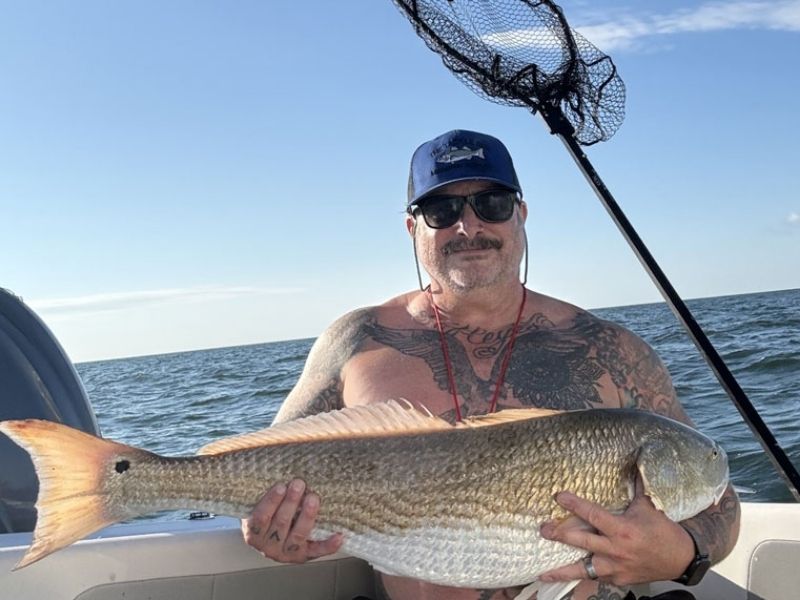
A subscriber trolling hoses and spoons south of the Targets in hopes of locating blues and mackerel reported an excellent surprise, reeling in a monster redfish. He said the fish came from a huge school he spotted after seeing some birds that gave away the fish’s location. These reds have been encountered in several areas of the Lower Bay from the mouth of the Potomac River down to Cape Charles but finding them can be like looking for a needle in a haystack. It takes a bit of luck, but they tend to cruise around depths of 25 to 50 feet of water along channel edges and shoal areas. When searching for the reds in open water, side scan is an essential piece of equipment to have on your boat. That way you can cover large areas of water. These bull reds will stay in open water throughout August, but once September rolls around, they will start to return to the shallows before leaving the Bay later in the fall. The shallow marshes on the Eastern Shore are where they tend to go when they move to shallower water, but the bulls can also be caught in the shallows around the mouths of the western shore tidal rivers in the fall as well.
The Tackle Box reports that some speckled trout are still being caught around the mouth of the Potomac River. There should also be a few specks around the shallows of the St. Mary’s River and the Virginia tidal rivers. The bite has been slow this year, but the ones being caught are on the larger side, with most around 20 inches or larger. We also had a report from an angler on the Rappahannock who said the speck fishing has been very slow this year, but within the past two weeks the bite has picked up and fish have been willing to hit topwater lures over grass beds in the mornings and evenings. Along with the specks, puppy drum reports have been slim to none this year, but August through October is when they tend to show up in better numbers, so keep an eye out for them to make an appearance over the next few months.
Bluefish and Spanish mackerel are providing plenty of opportunities for boats trolling spoons and surgical tubes. Smith Point, Windmill Point, and the lumps around the Target Ship are hotspots. The better mackerel bite has been on the western shore side of the Bay along channel edges at depths of 25 to 40 feet of water. There is a little over a month left of cobia season on the Chesapeake Bay. Anglers should look for a push of fish over the next few weeks, but they are still being caught in the traditional zones around Windmill Point, Smith Point, and the Target Ship. Reports have not been great this year, but we are starting to get a few more reports of fish being caught on the troll using surgical eel lures. Unfortunately, we had reports of a bad red tide near the mouth of the Rappahannock this week that covered a large area of the Bay running across to the Eastern Shore. The red tide is caused when microscopic algae multiply and grow out of control. When they die off, it depletes the water of oxygen and can kill fish. Red tides make for very poor fishing conditions as fish often leave the area completely when this phenomenon is occurring.