Lower Chesapeake Bay Fishing Report, September 24 Update:
The Lower Bay is loaded with variety right now, from speckled trout and puppy drum in the tidal rivers to spot, croaker, and flounder on the bottom. Falling temperatures are also beginning to concentrate bait and spark more surface activity, while shrimp in the Virginia creeks provide another option for anglers willing to explore the shallows.
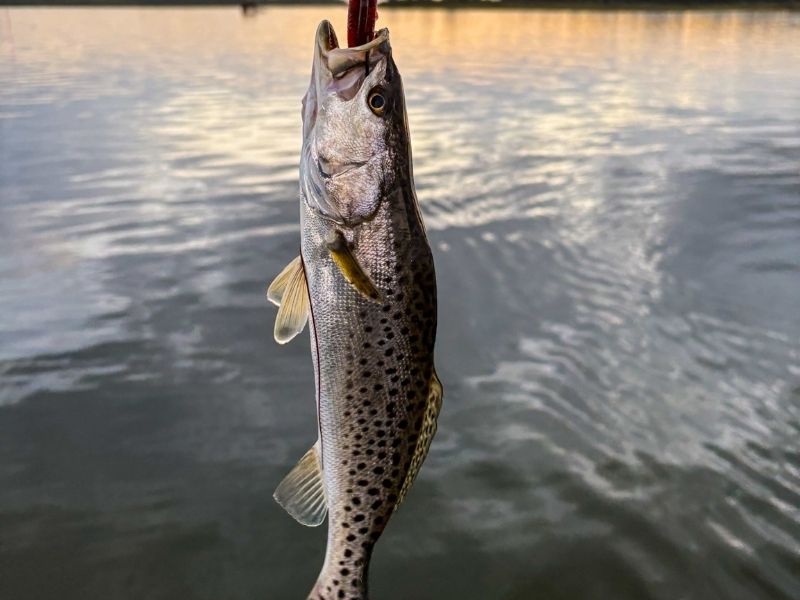
There has been an influx of small speckled trout to the tidal rivers of the Lower Bay. Anglers fishing from the York river up to the Potomac River are reporting that speckled trout in the 10” to 14” range are abundant around grass beds and creek mouths. Some anglers have also run into pockets of micro trout that are around six inches. Although these fish are mostly under the legal size to keep, it is a great sign that the speckled trout fishery will rebound in a year or two as long as these year classes can make it through this winter. If you want to get out and catch some of these fish before they head south later next month, casting around small three-inch paddletails can be very effective. Popping corks are another great way to target them, and with shrimp in the area, tip a jighead with your favorite soft plastic shrimp imitation, or cast net some live shrimp, and throw them around grass beds. You may also pick up some puppy drum and rockfish while casting for specks. The best recent reports have been from the Corrotoman, lower Rappahannock, and Piankatank. These fish should stick around well into October, so get ready to hit the shallows over the next few weeks.
A subscriber fishing the rugged bottom in Cornfield Harbor said there was a great mixed bag, including spot, croaker, puffer fish, flounder, and even a couple of bluefish hitting lugworms on top-and-bottom rigs. Some of the spot and croaker were fit for the cooler, but the rest of the fish were on the small to very small side. The bottom fishing should stay consistent for a few more weeks, but falling water temperatures will start to make our seasonal visitors, such as spot, croaker, and bluefish head south once water temperatures get below the 70 degree mark. When these fish leave, transitioning to perch fishing is a good option. White perch fishing has been good on the tributaries of the lower Potomac this year, but the perch are not spread out as much as in years past. Most of our reports have shown that anglers are covering a lot of water without any bites, but are then able to find a large school of perch on one dock where they can fill a cooler with enough for dinner. If you are experiencing similar results without any bites, keep searching shoreline cover to hopefully locate them.
Fishing on the main stem of the Bay has been just about impossible this week thanks to the strong northeast winds that have the Bay rolled up and choppy. When the winds eventually subside, Lower Bay anglers can look forward to some bird action and blitzes from bluefish and striped bass. The rockfish on the lower Potomac have been feeding under birds at times from Dahlgren down to Cobb Island. Bluefish have been pushing bait and blitzing at times in depths of 20 to 40 feet of water from the mouth of the Potomac down to Windmill Point, but they will become more scarce as water temperatures drop. If you can't get out on the big water, the shallows should be very productive right now. It is also a good idea to bring a cast net with you because there have been shrimp in most of the tidal creeks in Virginia waters. Throwing nets in creeks along marshy banks and over shallow mud flats can provide you with some big shrimp that are perfect for bait or even a shellfish dinner.
Lower Chesapeake Bay Fishing Report, September 18 Update:
The Lower Bay has a lot to be excited about right now, with a mix of speckled trout, bluefish, striped bass, bull reds, and bottom-fishing opportunities keeping things interesting. Some of the summer action is beginning to fade, but other fisheries are stepping up to fill the void. The cooling water should only add to the excitement in the coming weeks, particularly as bait and predators begin their seasonal movements.
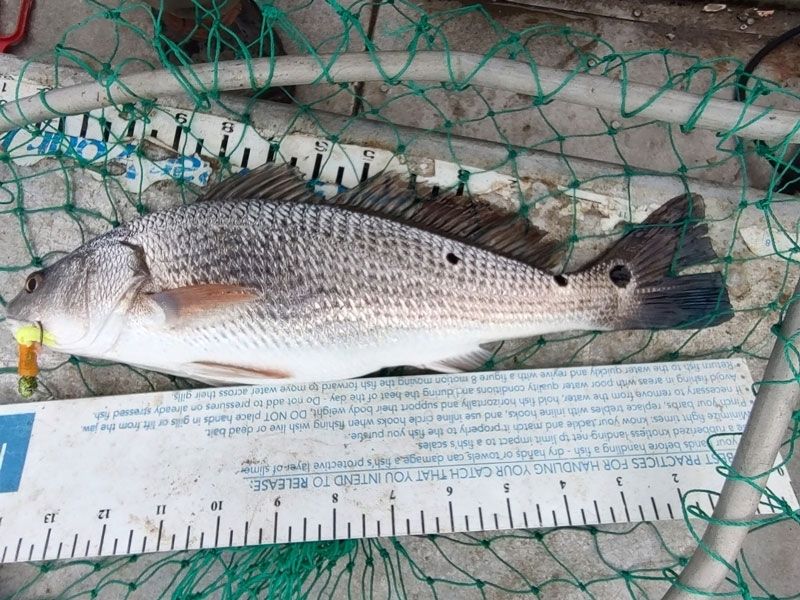
There has been a surge of speckled trout in the Lower Bay recently. This is good news after two hard winters in a row, but the majority of the fish recently have been small. This is bad news if you are looking to box one for a meal, but good news for the future of the fishery rebounding in a few years. FishTalk contributor Eric Packard checked in after spending a day fishing around Cornfield Harbor at Point Lookout. He caught 25 speckled trout, but most were 12” to 14”. Most of the fish were caught in the channel leading out to Cornfield Harbor. They were caught on electric chicken, chartreuse, and white colored plastics, plus a MirrOlure Heavy Dine in pink/chartreuse. We also saw a report from an angler fishing on the Rappahannock that they had a recent trip where they caught over 50 speckled trout. The biggest fish was 24” and there were some other keepers in the mix, but there were also a lot of undersized specks. Again, this is a good sign for the future of the speckled trout fishery in the Chesapeake Bay.
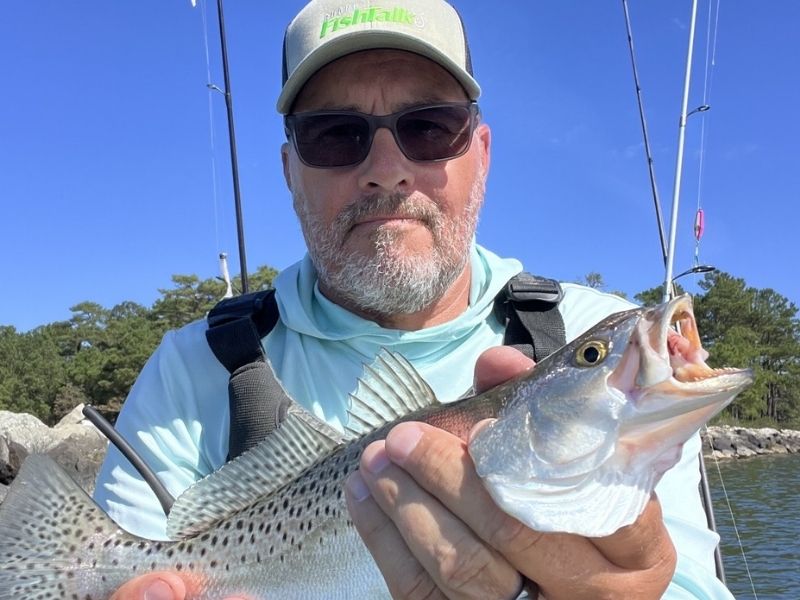
The Tackle Box reports that the Lower Bay is offering excellent late-summer variety. Spanish mackerel numbers are beginning to thin, but blues have moved in throughout the lower Bay, with larger fish in the six- to 10-pound class reported in the shipping channel below Hoopers Island down through the Virginia line. These fish are readily taking trolled surgical eels and spoons. Smaller bluefish are also available around Point Lookout and the beaches, and there have been reports of limits from the rocks and pier. There have also been a few bull red drum landed from the rocks near the point from anglers casting from shore. Striped bass are providing good shallow-water action in the Potomac during the morning and evening, with topwater lures, paddletails, and jerkbaits all noted as effective. Trollers working deeper edges and drop-offs have been able to find some slot-sized fish. The bull red drum fishing is starting to taper off in the main stem of the Chesapeake Bay in Maryland waters, but there is still a chance to run across the large schools in open water feeding on menhaden. As water temperatures are beginning to fall, the reds are starting to move south, and the fishing along the Eastern Shore of Virginia has been very good recently.
Shrimp have been a big talk during the fall on the Chesapeake Bay in recent years. Not grass shrimp, brown and white shrimp. These tasty critters are becoming more common during the fall months on the Chesapeake, and anglers are already starting to catch them. Larger shrimp are often found around shallow grass beds, marsh edges, oyster structure, and creek mouths as they prepare for colder weather. Shallow mud flats can be particularly productive areas, especially at night as more shrimp move into the shallows. A simple cast-net approach works well, particularly around moving water where shrimp are pushed along marsh banks and through creek channels. Look for shrimp flicking on the surface or concentrated around submerged vegetation, and make short, controlled throws with a properly sized mesh net. A good way to locate them is to motor around and look for them jumping in your prop wash. Early morning, evening, and periods around a moving tide can be especially productive, and the shrimp can make excellent bait or a great meal.
Lower Chesapeake Bay Fishing Report, September 10 Update:
A wide range of fish can be found in the Lower Bay right now, as summer and fall species mix and feed in a big way. The list includes bull reds, puppy drum, speckled trout—many more specks recently than we’ve been seeing this year, though mostly on the small side—bluefish, Spanish mackerel, and a few cobia as well. Bottom fishermen are picking up solid numbers of spot and croaker plus some kingfish and lots of small puffer fish. Signs of fall are starting to show up in several ways. There has been a coolness in the air at times over the past week which are definite signs of the seasons changing.
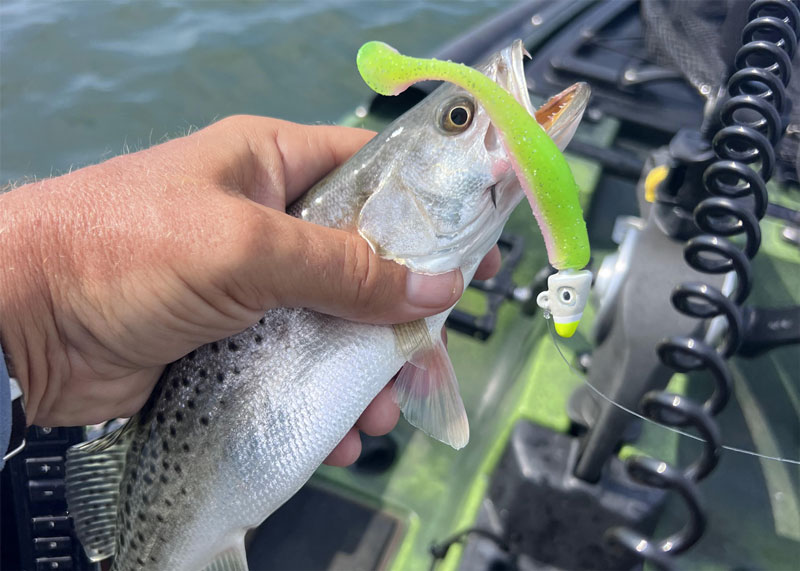
The Tacklebox reports a good striper bite in the Potomac, with Piney Point and the docks of St. George’s Island producing plenty of fish from 22” to 26”. Contributor Eric Packerd confirmed that action with a trip to St. George’s, where he caught a dozen rockfish casting a bone-colored Spook and a white paddletail. He noted that most of the fish hit on the topwater lure. He also fished St. Indigo this week, where he caught a bunch of speckled trout plus a bluefish on five-inch Electric Chicken paddletails. Unfortunately, all of the trout were on the small side.
A subscriber checked in after an awesome day perch fishing on a tributary of the lower Potomac River. He and another angler spent a morning fishing around docks with ultra-light gear. They reported that the water in the upper reaches of the unspecified tributary was dirty from the recent rains, so they headed back towards the main stem of the Potomac to find cleaner water. After searching some smaller creeks, they found a few docks that were loaded with perch and lit up their side scan. The fish were relating to shade under platforms and were eager to hit anything they threw their way. Live minnows under bobbers, shad darts, and tandem-rigged twisty tails were all effective. The two anglers caught over 100 perch and left them biting. They also mentioned that on a trip last week, they had similar results perch fishing, but that there were also some small puppy drum in the mix between 12” and 14”.
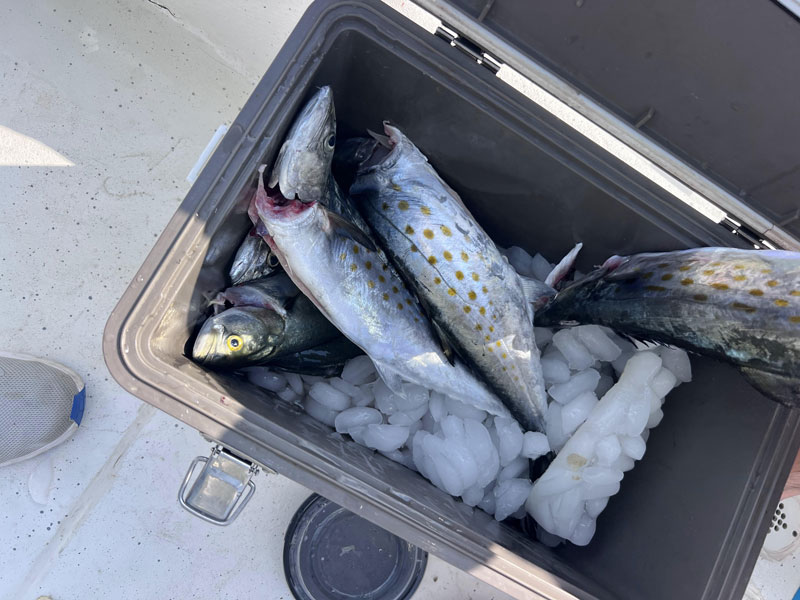
Mackerel action was sporadic this week, with several boats reporting that they couldn’t find them but one or two getting good numbers while trolling spoons behind planers. Bluefish, on the other hand, were not in short supply and The Tackle Box noted that they’re being caught along the channel edges and many of the Lower Bay river mouths—but on the lower Potomac they have been “dependable every day.” There have also been some bird shows popping up on the Potomac River. We heard reports from anglers finding birds with feeding rockfish underneath between Swan Point and Coltons Point. One angler who encountered the feeding fish said that it was a large school of 12” to 15” stripers pushing bait. Another angler found a school of mostly slot and a few over-slot fish feeding on menhaden in open water.
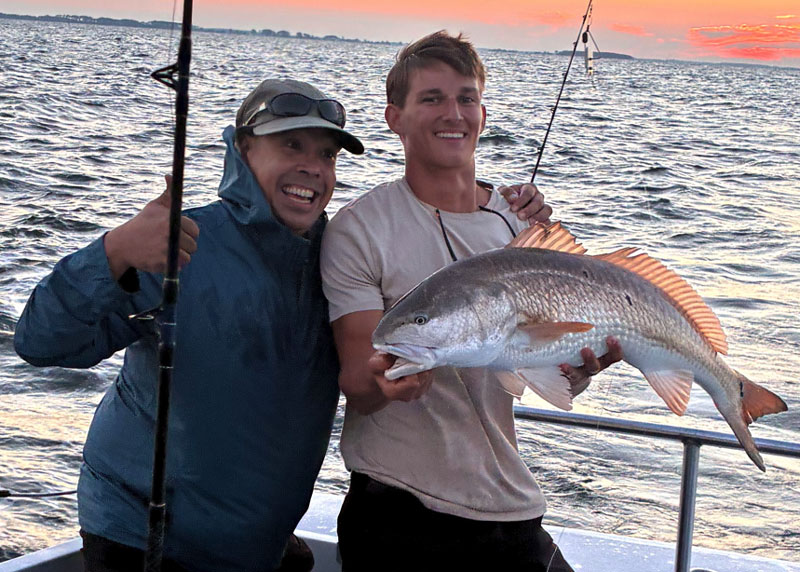
Bull redfish continue to be found more or less randomly at times with the area a few miles south/south-west of the Targets a regular hot zone. We heard fewer reports of them this week than last, with most boats catching just a fish or two instead of the multiple hook-ups of last weekend, but that may be due to the winds and labor day crowds as much as anything; these fish should remain in the area for a couple more weeks unless temperatures fall significantly. As usual most that get caught are being sighted on side-scan then cast to with fast-sinking 1.5- to two-ounce heads and five- to seven-inch plastics. The anglers being successful are acting fast when the fish are spotted because they’ve been moving fast, and if you don’t get off quick casts and hook up right away it usually means going back to searching.
Up the tidal rivers catfish action seems to be picking up for fall already. Captain Seth Nighswonger from Fish The Potomac charters reports that the blue catfish bite is picking up on the Potomac River in Washington D.C. with the bigger fish getting more active as there has been some cooler weather dropping water temperatures. Recent trips have produced a mixed class of fish with some 15 pounders offering fun action and occasional fish over 20 pounds putting big bends in rods. They have also found some keeper white perch while bottom fishing north of the Woodrow Wilson Bridge. Anglers on the Rap report good catfish action from Leedstown up, and of course the James remains a perpetual blue catfish hot zone.
Bottom fishing in the Lower Bay continues to be strong with the best croaker action we’ve seen in years, nice spot showing up, and a smattering of additional species including kingfish, puffers, and some small gray trout. The lower James has been a highlight in recent days and we heard from an angler drifting lugworms over hard bottom who filled a cooler with croaker up to 13”, some eating-sized spot, and several kingfish. The fish have been over oyster bar bottom throughout the lower tribs of the Western Shore and this bite should continue to get better and better over the next month or so.
Lower Chesapeake Bay Fishing Report, September 4 Update:
The Lower Bay is offering one of the best mixes of species right now, with bluefish and Spanish mackerel holding along channel edges and bull reds appearing sporadically throughout the same areas. Side-scanning has been key for locating the reds before they surface, when anglers can quickly cast large paddletails for explosive action. Rockfish are also biting around the lower Potomac, while Rappahannock oyster bottom is producing croaker, spot, and a mix of drum and sheepshead.
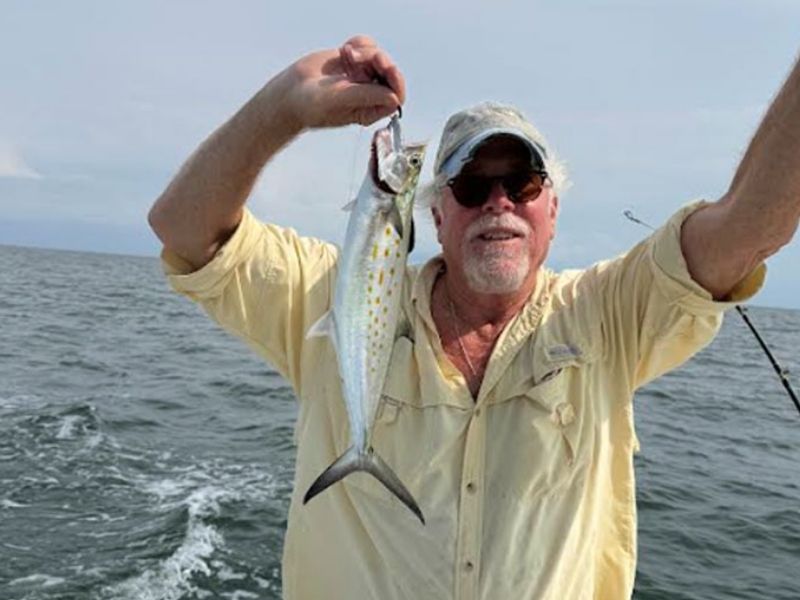
Contributor Eric Packard says some bluefish were biting on spoons behind planers in the mainstem Bay along the channel edges outside of the mouth of the Potomac last weekend, and although the boat he was on didn’t tie into any bull redfish he did see a light-tackle boat bring one up in the area. The birds weren’t active, and the boat appeared to be running around side scanning to find the big fish. He then heard from a friend that later in the day the reds came up and boiled the water, and several boats got in on intense action. A subscriber checked in after hitting the same area and said his trip was cut short by gusting winds, but in the short time he trolled small spoons behind planers, he picked up four blues and a mackerel. Another fishing farther south, a few miles below the Target Ship along the channel edges, said multiple boats were side scanning for the reds and when they were spotted, the first boat or two to the marks would enjoy double and triple hook-ups. But the schools moved on quickly and the fleet’s arrival generally meant the fish were gone. Casting 1.5- to three-ounce heads with white or pink paddletails was effective. Packard also took advantage of the opening week of rockfish season and made it down to Piney Point to take some casts. He headed down the St. Georges Island side, throwing a topwater bait in bone color. He started catching fish on some offshore structure and ended up pulling 12 fish that ranged from 22” to 26”. A couple fish were caught on half-ounce Hard Head Custom Bait jigs with a five-inch Rapala The Mayor plastic. Once the tide dropped out, so did the bite. He went back up towards the bridge and caught some small bluefish and had some puffer fish harassing his plastics. Packard made one more trip to the Potomac this week and spent a morning casting on Smith Creek. He caught some small speckled trout and small bluefish while casting around soft plastics. If you are looking for the chance to catch a variety of species, the Lower Bay is the right place for you.
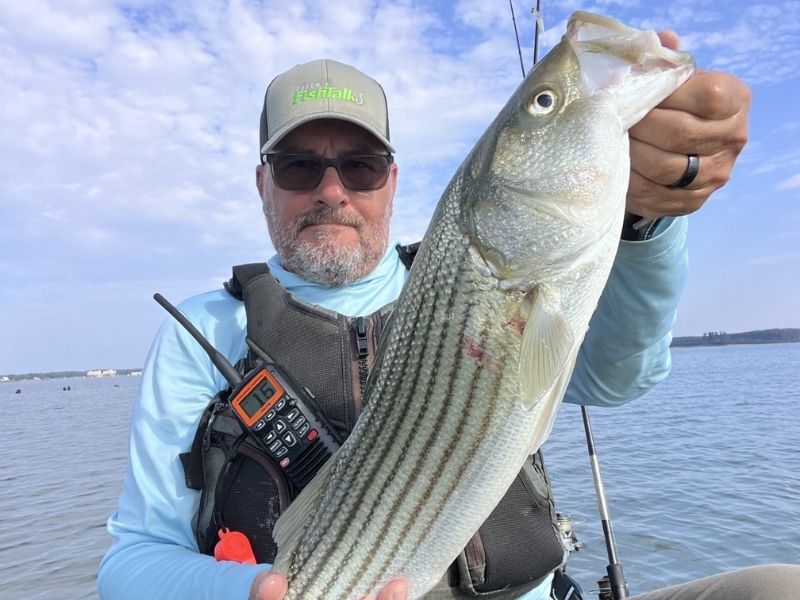
Down on the Rappahannock, there are some red drum, black drum, and sheepshead around bottom structure and other reef sites in the river. Bottom fishing for croaker and spot has also been very good around oyster bottom in the lower half of the river. Spanish mackerel have been prevalent along the deeper channels in 20’ to 40’ of water towards the mouth of the river and on the main stem of the Bay. One boat fishing this week reported that they found the mackerel around the 2R buoy and boxed a dozen nice mackerel while trolling. We heard of some rumored puppy drum reports coming in from around the Deltaville area, but we could not confirm them. However, it is the right time of year for the pups to start showing up.
The Tackle Box reports that white perch fishing has been good on the tidal tributaries of the Potomac River. These fish should become increasingly concentrated in the tidal creeks and rivers as fall approaches, with the larger fish relating to deeper holes, channel edges, docks, fallen trees, rip-rap, and other hard structure in relatively shallow water. The best approach is to work small jigs, Beetle Spins, Mepps-style spinners, or shad darts around shoreline cover, particularly on a moving tide. Early and late in the day, perch will often push into three to five feet of water to feed on bait, while brighter daytime conditions can send them tighter to shaded docks, pilings, and deeper structure. Puppy drum have also made an appearance on the Potomac, so they should be around the Virginia tidal rivers as well. One reader said they found a school of around a dozen under slot and slot puppy drum in an unspecified area of the Potomac this week. Puppy drum will often occupy many of the same shallow-water areas as the perch, particularly around grass, oyster bottom, riprap, creek mouths, points, and deeper pockets adjacent to flats. As the water cools, look for them where current funnels bait through narrow cuts or along the edges of shallow flats. Small paddletails, Beetle Spins, and other compact jigs are effective when cast around structure and retrieved just above the bottom. In Maryland, the recreational red drum limit is now three fish per person per day with an 18” to 26” slot. Virginia regulations also allow three red drum per person per day, with an 18” to 26” slot.