Tangier, Pocomoke, and Lower Shore Fishing Report, July 31 Update:
Spanish mackerel are going to offer a new attraction around the Tangier Sound while striped bass are off limits, with more fish moving into the region alongside steady bluefish action. Bottom fishing remains excellent, with keeper croaker, spot, kingfish, and white perch providing reliable catches over oyster bars, tidal creeks, and shell bottoms. Black drum, sheepshead, and red drum are also offering additional opportunities, making Tangier one of the Bay's most diverse summer fisheries.
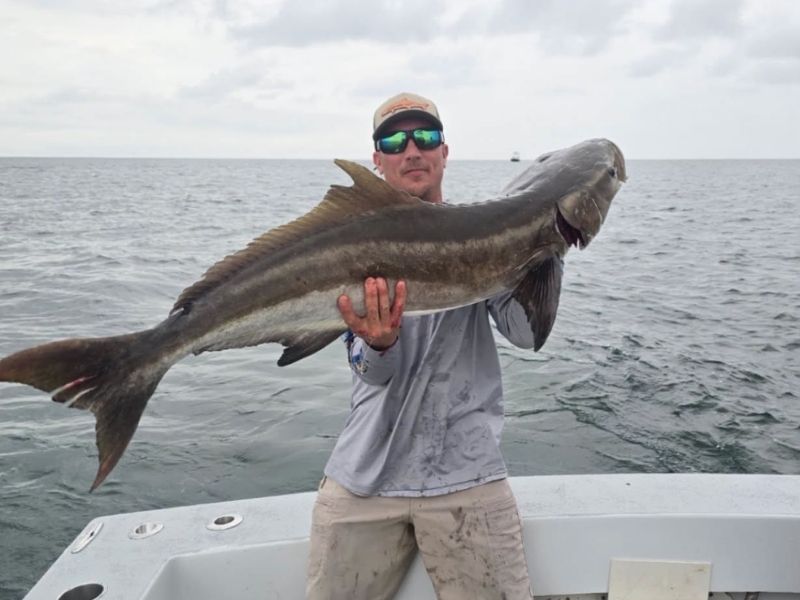
The summer striped bass closure will go into effect on August first for all Maryland waters of the Chesapeake Bay and its tributaries. The closure will be in effect for the entire month of August, and the season will reopen on September first. In Virginia waters, striped bass season is closed until October 4th, but catch and release fishing is permitted. While the closure starts, spanish mackerel are starting to show up in better numbers in the Chesapeake Bay. The larger schools have been located on the western shore, but there should be some moving up the shipping channel ledges on the east side of the Bay. Depths of 25 to 40 feet on the west side of Smith Island and Tangier Island are generally good zones to catch mackerel. There should also be plenty of bluefish around to keep rods bent. A subscriber checked in after fishing out of Point Lookout this week. Their goal was to catch cobia, but they couldn't locate any while sight fishing despite great conditions. They then anchored up near the Target Ship and caught some bluefish, spot, and whiting. They suspect the big blues are not at the Target Ship in good numbers since the spot have moved into the area. Trolling will be the most productive way to bring fish over the rails, but if you get calm conditions, there's a chance to run across fish feeding on the surface, in which case, casting metal jigs is a very fun way to catch them on light tackle spinning gear. A good way to know that mackerel are in the area is to keep a close eye on the waters surface because they will often jump out of the water chasing bait. Mackerel prefer trolling speeds of six to nine knots, whereas the bluefish tend to bite better when trolling around four to six knots. Drone and Clark spoons trolled behind number one or two planers gets the job done for both of these toothy fish. Spoonbrellas are also very effective and are a somewhat newer rig that is getting a lot of attention from Chesapeake Bay anglers.
Sea Hawk Sports Center reports that there have been some nice catches of black drum in the Tangier Sound. The fish are biting peeler crab around reefs, wrecks, and oyster bars. The artificial reefs in Virginia waters have also been holding some red drum and sheepshead, but the bite tends to differ from day to day. These areas are still worth checking out if you are fishing in the Tangier region. There have also been decent reports for perch fishing in the smaller creeks in coves in the tidal rivers surrounding the Tangier and Pocomoke Sound. Casting small spinners and jigs is a fun way to catch them, but the bite on artificial lures has been mostly limited to early mornings and late evenings. Other anglers prefer to fish for them with soft crab or bloodworms. In the shallows, fallen trees, docks, undercut banks, and rip rap are all areas that perch tend to hang around. The open water bottom fishing over oyster bars and shell bottom has been very good for spot, croaker, and kingfish. Anglers will be happy to know that there are plenty of keeper croaker around, although the undersized fish still outnumber the keepers. Bloodworms and the less expensive, yet very effective, bloodworm flavored Fishbites are two of the best baits to start filling a cooler with these delicious saltwater panfish.
Tangier, Pocomoke, and Lower Shore Fishing Report, July 23 Update:
Bottom fishing has become one of the biggest highlights in the Tangier region, with keeper croaker, spot, and white perch providing steady action around oyster bars and tidal rivers. Shallow-water striped bass fishing continues to produce during the early morning, while bull red drum and cobia remain available for anglers willing to put in the time searching open-water shoals and channel edges. With Maryland's striped bass closure approaching, anglers have one last opportunity to target rockfish before the August break.
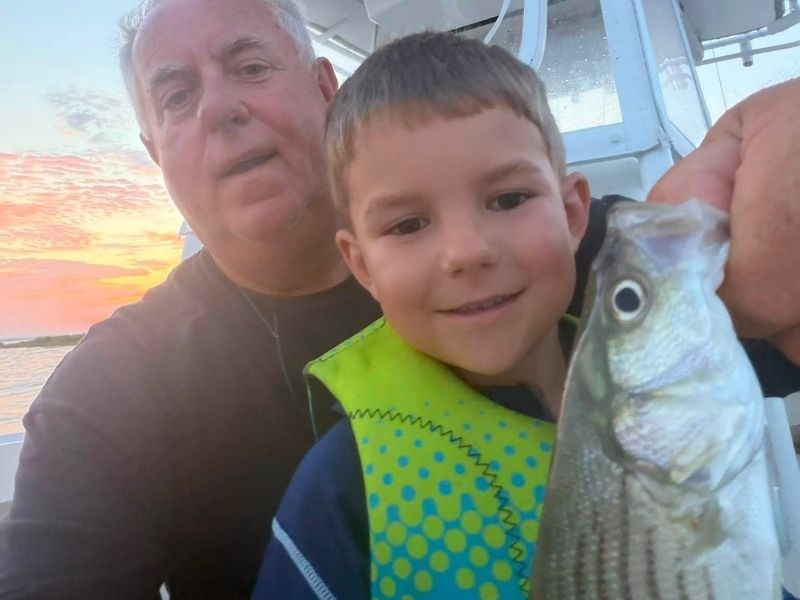
Keeper croaker are offering great bottom fishing action around the oyster bars and mouths of the tidal rivers in the Tangier region. The under-sized fish still outnumber the keeper-sized fish, but enough keepers are in the mix to make bottom fishing a great option right now. A few areas that are producing keeper croaker right now include the mouth of the Nanticoke and Manokin, Frenchtown-Rumbly, and near Crisfield. White perch are being caught further up the tidal rivers in the smaller creeks. Small bits of peeler crab on bottom rigs are working well in open water at depths of three to 10 feet of water. Along shorelines, small spinners and panfish jigs work well near docks, rip-rap, and fallen trees.
Captain C.L. Marshall of Tangier Sound Charters recently had a great bottom fishing trip and his crew caught a mix of croakers, spot, pufferfish, sharks, rays, and a variety of other bottom dwellers. Throwing out cut bait near shoals and drop-offs can provide steady action for sharks and rays, but will also give you a good chance to catch bluefish, cobia, and even red drum. The bulk of the bull reds are schooled up in open water, but as we approach the end of August and head into September, they will start to return to the shallows of the lower Eastern Shore. Once they do, anchoring up near grass beds and throwing out fresh peeler crab on fish-finder rigs is a popular way to catch them. The evening and night bite is usually better than the morning and midday hours.
There is only a week left before the summer striped bass closure, which will be the entire month of August for all Maryland waters of the Chesapeake Bay. The closure is set in place to help protect striped bass during the summer months when the water temperatures are at their hottest. These fish struggle with catch and release fishing when water temperatures are hot and dissolved oxygen levels are low, so it is best to give them a break for a few weeks. The season will open back up on September 1st, which should offer some great fishing from then through the fall. Virginia waters will remain open for catch and release fishing during the Maryland closure, but the catch and keep season for Virginia will not reopen until October 4th. The stripers are still feeding in the tidal creeks and along nearshore stump fields and grass beds. Early morning topwater action has been good and can continue well into the morning on overcast days. Lonely angler topwaters and Heddon Super Spooks are great topwater lures that work well for specks, reds, and rockfish.
There's a New Premium Access Video for Subscribers Only!
We posted a new video, Fishing the Tides and Currents, this morning. If you want to learn more about how to harness tides and currents to your angling advantage, check this one out.
Tangier, Pocomoke, and Lower Shore Fishing Report, July 17 Update:
Bluefish remain the most dependable target around Tangier, with excellent action around wrecks, shoals, and the Target Ship, while Spanish mackerel numbers continue to build. Cobia fishing has been inconsistent, but trophy bull red drum and shallow-water striped bass continue to provide opportunities for anglers willing to put in the effort. Early mornings remain the best time to target rockfish along creek mouths, shoreline points, and other ambush structure.
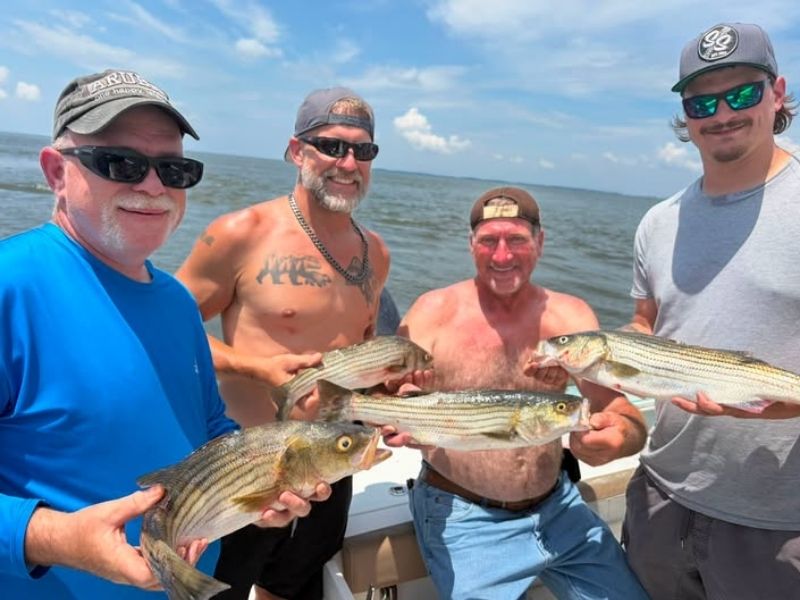
Bluefish have provided the most consistent action in the Tangier region this month. The blues are being caught near the Target Ship, around wrecks, and around lumpy areas west of Smith and Tangier Island. Trollers are doing very well with single spoons or surgical eels behind planers. The blues have been a nice class of fish mostly falling in the four-to-eight-pound range, but a few 10-pound fish have also been caught. The bulk of the Spanish mackerel are still south of Tangier Island, but there are some more fish starting to show up. The final two weeks of the month should offer good opportunities for mackerel near shoals and drop-offs in depths of 25 to 40 feet of water. Mackerel are a fast-moving fish, so trolling at speeds of six to nine knots is usually a sweet spot. Spoonbrellas and drone/clark spoons pulled behind number one or two planers will be the best spread for landing these fish. When better numbers of mackerel are around, you can often locate them by watching the horizon for them jumping out of the water. When the schools gather and blitz, casting gotcha plugs and other metal jigs, then reeling it in as fast as you can is a great way to entice bites.
Cobia are still elusive for the most part in the Tangier region. The typical hotspots around the Target Ship and Tangier Sound Light are producing a few fish, but most boats are working hard to find them. We have heard from several anglers recently that took trips around the Target Ship without seeing any signs of cobia. It appears that the most consistent action is still south of the Maryland line, but more fish should be migrating up the Bay with each passing week. Bull reds are another trophy fish that can be found roaming this region of the Bay. The bulk of the big reds have schooled up and are moving around open water, which makes them elusive and hard to pattern. Despite this, there are a few areas they tend to hang around, which include lumpy/shoal areas, near wreck sites, and along the main shipping channel, usually at depths of 20 to 40 feet, but sometimes shallower. If you don’t want to burn the fuel looking for these trophy fish, rockfish are providing some action in and around the creeks in the tidal rivers. Early mornings have been best, and these fish are usually willing to hit topwater lures. The key to finding rockfish in the shallows this time of year is the ability to find areas with a moving current, an ambush spot, and a little bit of luck. Shoreline points, creek mouths, wrecks, riprap, stump fields, and docks are all places of interest to cast a line to when searching for the rocks.
Tangier, Pocomoke, and Lower Shore Fishing Report, July 10 Update:
The Tangier region continues to offer outstanding summer variety, with striped bass, speckled trout, bluefish, cobia, spot, croaker, and white perch all available. Bottom fishing has been particularly productive, with jumbo spot and keeper croaker showing up in good numbers around shoals and oyster bars. While cobia reports remain hit or miss, bluefish have been providing fast action around the region's lumps, wrecks, and reefs.
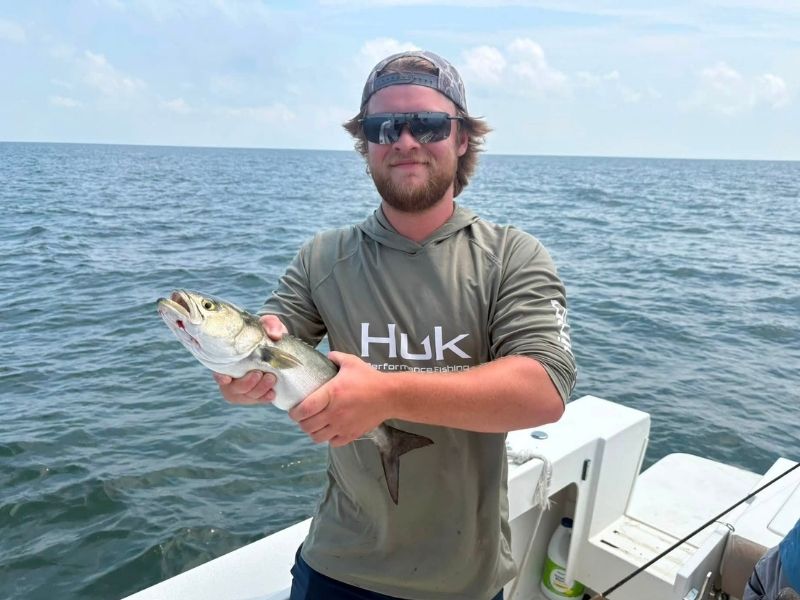
The shallow water fishing has been best during low light hours as the summer heat has really ramped up. Striped bass are prowling along marshy shorelines and at creek mouths. The best tide to fish has been a high falling tide as baitfish get swept out of the creek mouths, stripers are often waiting to ambush. Most of the fish are slot and over slot fish. Striped bass season is open in Maryland waters of the Chesapeake Bay until the end of the month, but the season is closed in Virginia waters. Catch and release fishing is still allowed in Virginia waters while the season is closed. Along with stripers, a few more speckled trout are showing up in the shallows. The few fish that are being caught are a good class of fish that range from 18” to 27”. They tend to hang around rock jetties, grass beds, and stump fields. The best way to catch them right now is to be on the water early and plan to cover a lot of water fishing “specky” looking areas. With enough casts, you might tempt one into the net.
One of the highlights of this region has been the excellent bottom fishing over the open Bay shoals and at the mouths of the tidal rivers. Jumbo spot have moved up the Bay and are now prevalent in the Tangier region. In most areas, they are eating size and often mixed in with croaker. There are a lot of eight-inch croaker, which are just under the legal size in Maryland waters, but there are also a good number of keepers in the nine to 10” range that are mixed in as well. These fish have been hanging out around the shoals and oyster bottom areas, typically in depths of 10 to 15 feet of water. There has also been some big croaker up to 14” and some puppy drum between 10” and 14” in the tidal creeks and upper reaches of the tidal rivers. These fish have been caught by anglers throwing out bottom rigs with shrimp or worms. The white perch have been more concentrated in the creeks of the tidal rivers along marshy shorelines and areas with docks and fallen trees. Grass shrimp are the most effective bait, but if you locate a large school of perch, you can usually catch them on small artificial jigs and spinners.
Cobia fishing has been hit or miss. We have had reports of a few keeper fish caught around the Target Ship, the lumps around Tangier, and the shoals along the Eastern Shore of Virginia. We have also had several reports from anglers who have struck out while looking for cobia in these same areas. An effective method has been to anchor and set out chum blocks to attract the fish, then toss out fresh bunker chunks or live eels to get them to bite. We had one report this week from an angler who went looking for cobia near the Target Ship but did not find any signs of life. The bluefish have been much more prevalent and have been encountered in these same zones. Anglers chunking with bunker or spot are catching some big blues up to 30”. Trollers pulling spoonbrellas and other metal or surgical tube lures are also doing well in these zones trolling around lumps. The various wrecks in the Tangier region have also provided fun action for bluefish with anglers casting poppers and jerkbaits. There are also rumors that these wrecks are holding some sheepshead, but we will need some of you to go confirm those rumors for us.
Tangier, Pocomoke, and Lower Shore Fishing Report, July 2 Update:
Encouraging reports of speckled trout and puppy drum are beginning to surface around the Eastern Shore, while cobia and bull red drum continue to provide exciting action around shoals, lumps, and shallow flats. Bluefish, sheepshead, spot, and croaker are adding to the variety available throughout the region as summer fishing reaches full swing. Early mornings, evenings, and moving tides remain the best times to beat the heat and find active fish.
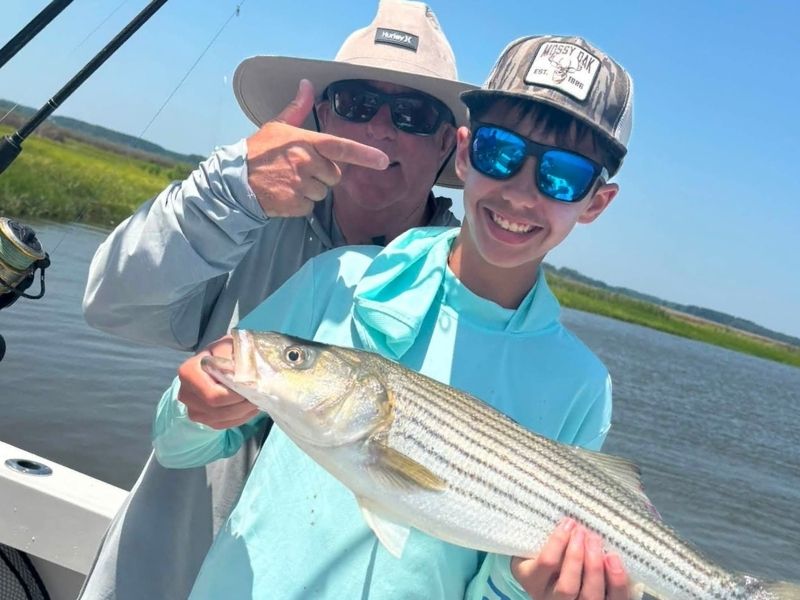
The good news this week is that a few more speckled trout are starting to show up along the Eastern Shore. The reports still aren’t great, but the shallow grass flats and shoreline points are producing some more trout. We heard reports from the Honga River, Manokin River, and Pocomoke Sound. Rockfish still greatly outnumber the specks, but it is good to see a few show up. Some small puppy drum between 12” and 16” have also been caught by anglers throwing out bait from shore. The pups aren’t keepers, but they are also a welcome sight after a brutal winter that has left questions about whether these migratory fish were going to show up this year. Water temperatures are warming quickly as summer heat waves move in. The shallows have reached the low to mid 80s, so shallow water fishing will be best during early morning hours. Creek mouths can still produce some fish during moving tides throughout the day, but fish will often move to secondary ledges and deeper structure when the sun is high in the sky.
Bull red drum are still being found in the shallows of the lower Eastern Shore. The bite has been a little slower than early in the summer, but the evening and night bite is still producing some fish that are willing to hit fresh peeler crab. Out at the shoals and lumps in 15’ to 30’ in the Tangier Sound, Pocomoke Sound, and on the main stem of the Bay, cobia catches are increasing. A subscriber checked in after an eventful overnight angling adventure at the Target Ship. They fished fresh cut alewife and caught a pile of bluefish ranging from snappers to choppers, plus a cobia (first-timer Ian from LA says “Yes—I love that!”). Spot and croaker were also around and willing to bite baits dropped to bottom. Another angler who visited the Target Ship during daylight reported that trolling hoses and spoonbrellas produced a half-dozen bluefish in the three- to five-pound range. Bluefish have also been caught at several reef and wreck sites. These pieces of structure also hold some sheepshead and occasionally rockfish. Bottom fishing at the mouths of the tidal rivers and over oyster bottom has led to steady catches of spot and croaker. The croaker are a mix of undersize fish and keepers up to 12”. Bloodworms, Fishbites, and shrimp are working well for bottom action.
Premium Access Bonus Video for Subscribers Only
Want more intel on summer dock fishing for species like striped bass, red drum, and white perch? See the first in our new series of in-depth how-to videos for FishTalk subscribers only: How to Fish Docks for Striped Bass, Slot Reds, and White Perch.