Tangier, Pocomoke, and Lower Shore Fishing Report, September 24 Update:
The nor’easter has made the main-stem Bay a tough proposition, but protected waters around Tangier Sound and the lower Eastern Shore are still producing. Rockfish, speckled trout, white perch, flounder, and other species are keeping anglers busy, while the fall drum run was going strong before the weather moved in.
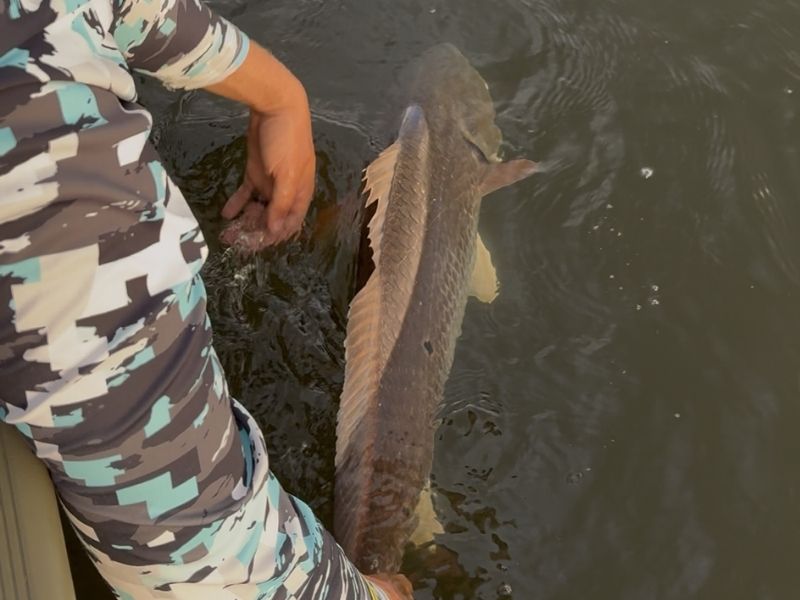
The nor’easter this week has pounded the region with strong winds and flood tides that have made fishing conditions less than ideal. Chasing big reds and bluefish on the main stem of the Bay has been mostly out of the question with rough conditions, but there are some protected waters on the lower Eastern Shore that can still provide some action. The creeks in the tidal marshes should be offering some action on rockfish, speckled trout, and white perch. An angler fishing marshy shorelines on the Pocomoke River and Big Annemessex last weekend said that they found some decent sized white perch while casting around small spinners. They also caught some small sand perch. Captain C.L. Marshall of Tangier Sound Charters was limited to where he could fish by the wind earlier in the week, but was able to find some rockfish, croaker, white perch, spot, speckled trout, and several other species. FishTalk contributor David Rudow checked in and said that the rockfish are biting in the creeks of the Tangier Sound. Recent trips have produced good bites along deeper stretches of tidal creeks where a moving current is pushing baitfish along deep marsh edges. Casting soft plastics up to the banks and jigging them down the ledge has been an effective way to produce bites.
A subscriber who took a two-day trip to Crisfield and hit both the Tangier and the Pocomoke said they struck out on the big reds (skates and rays were “relentless”) but had a ton of action from other species. Casting in the shallows turned up tons of small speckled trout up to about 12”, puffer fish, flounder to 14”, small weakfish, lizard fish, and some sand perch that were big enough to eat. Some fish hit on Gulp!, but the most productive bait was fresh shrimp that they caught in a cast net. Out in open water, they did enjoy success on lots of snapper bluefish, which were present in very large numbers in 25’ to 40’. Before the winds cranked up, the drum run along the shoals from Saxis down to Cape Charles was red hot, and Sea Hawk Sports Center expects that this region will continue to produce supersized spot-tails on fish finder rigs baited with cut spot and hardhead. The reefs of the Chesapeake have also provided red and black drum, sheepshead, and even some sharks at times. Both drum and sheepshead have taken crab baits fished on a sweeper jig on the many reefs from the Tangier targets to the pilings of the CBBT! Now is a great time to get out for these seasonal visitors before the colder weather moves in and pushes them south. Anglers should also be aware that the Tangier Classic fishing tournament has been postponed to October 2nd through October 4th due to the forecasted weather for this weekend.
Tangier, Pocomoke, and Lower Shore Fishing Report, September 18 Update:
The Eastern Shore is putting on quite a show as the region begins its transition toward fall. Bull reds are stealing much of the attention, but striped bass, perch, sheepshead, and a surprise fishery are all adding to the variety. There have even been a few unexpected visitors making appearances, reminding us that you really never know what might eat your bait in the lower Chesapeake this time of year.
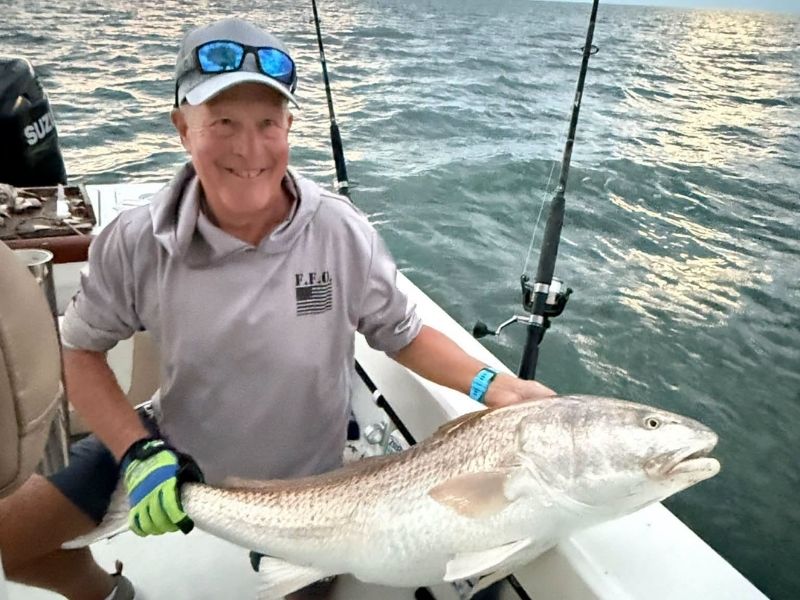
Captain C.L. Marshall of Tangier Sound Charters has been enjoying all that the Eastern Shore has to offer as we start to see a transition to fall fishing patterns. The main attraction has been the run of bull reds that are being caught along the shoals and reefs along the lower Eastern Shore from Crisfield down to Cape Charles. One trip this week produced a cobia, five bull red drum, some sharks, rays, and they also jumped a tarpon just 10 feet from the boat. Another trip out targeting reds last week led his crew to an intense battle with another tarpon that was pictured in last week's report. It took them a long time, but they eventually brought a 72” tarpon boatside for a few pictures and a release. Hooking and landing a tarpon in the Bay is one of the most impressive fishing feats that we have heard of. There have also been other confirmed catches of tarpon in this region over the past few weeks, and some boats have reported seeing them on the meter, so C.L. 's report just adds to the crazy lore of the Chesapeake Bay tarpon.
Sea Hawk Sports Center reports the Tangier and Pocomoke region is offering a broad mix of late-summer opportunities, with bull reds providing some of the most exciting action along the lower Chesapeake near the Accomack County line. The best redfish action has been around the evening hours on a running tide, with 7/0- to 9/0 circle hooks baited with chunks of live spot, croaker, or kingfish fished on the bottom. In the Tangier and Pocomoke Sounds, anglers targeting striped bass and perch should concentrate on feeder creeks, creek mouths, current seams, and structure where bait is pushed by the tide. Small jigs, paddletails, topwater lures, and live or cut bait can all produce, with moving water generally being key. Sheepshead are also providing a quality structure-oriented option on central Bay reefs, pilings, and hard structure. Peeler crab fished tight to structure on a stout jig or bottom rig is a proven approach, and anglers should be prepared to work vertically and keep the bait close to the rocks to avoid missing fish. As water temperatures begin to cool, expect baitfish and crustaceans to become increasingly concentrated around current, structure, and creek mouths, which should help make these fall patterns even more predictable.
Shrimp have been a big talk during the fall on the Chesapeake Bay in recent years. These tasty critters are becoming more common during the fall months on the Chesapeake, and anglers are already starting to catch them. In the Tangier region, we have reports of shrimp being caught on the Manokin River, Big Annemessex, and Pocomoke River. Larger shrimp are often found around shallow grass beds, marsh edges, oyster structure, and creek mouths as they prepare for colder weather. Shallow mud flats can be particularly productive areas, especially at night as more shrimp move into the shallows. A simple cast-net approach works well, particularly around moving water where shrimp are pushed along marsh banks and through creek channels. Look for shrimp flicking on the surface or concentrated around submerged vegetation, and make short, controlled throws with a properly sized mesh net. A good way to locate them is to motor around and look for them jumping in your prop wash. Early morning, evening, and periods around a moving tide can be especially productive, and the shrimp can make excellent bait or a great meal.
Tangier, Pocomoke, and Lower Shore Fishing Report, September 10 Update:
We have confirmation of a Chesapeake tarpon! Captain C.L. Marshall of Tangier Sound Charters had angler Justin Cable aboard and just 10 minutes into fishing, hooked up with the silver king. He said it took two hours to bring it up to the boat, where it was measured at 72”. Congrats, Justin and Captain C.L.! Meanwhile, the Sounds have plenty of bull redfish swimming around, and although the shallow water bite for specks and slot reds remains below par, in Maryland waters rockfish are making up for the gap.

In addition to the tarpon action, C.L. has been catching good numbers of bull redfish casting cut bait along the channel edges of the Sounds. The best move is to catch live spot and cut it on the scene, then fan-cast several lines on fishfinder rigs with enough lead to keep the rigs pinned firmly in place. Sea Hawk Sport Center is reporting the areas with shoals and drop-offs off Nassawadox Creek, Occohannock, and The Cell have been productive for the big reds. Low light especially right at sunset has been the best time to hook up. There are also bluefish, sharks, and even a cobia here and there showing up for those targeting the reds.
A few specks and smaller reds are popping up in the shallows, but as is par for 2026 the bite has been less than spectacular and many of the speckled trout that are around are small. Fortunately rockfish, including in the slot, are hitting topwater and paddletails mostly at dusk and dawn in the tributaries of the Sounds and at the salt marsh islands. A subscriber fishing up inside creeks off the Honga River reported he didn’t catch any specks or reds on a trip early this week, but he did find some rockfish that were well over the slot, pushing up into the 30” range. Five-inch white paddletails were the hot bait.
Bottom fishing over oyster bottom continues to be excellent and should remain a solid option for the foreseeable future. Keeper-sized croaker and spot are plentiful, and there are a lot more kingfish around than usual. A subscriber fishing bloodworms on bottom rigs reported getting five in the mix this week right outside of Crisfield. There are also lots of puffer fish around, although few are big enough for the frying pan. (Yes, the northern puffers are great eating! It’s the unusual smooth puffer, which is green/gray and doesn’t have the yellow and black coloration of northern puffers, which is dangerous to eat).


Tangier, Pocomoke, and Lower Shore Fishing Report, September 4 Update:
Bull red drum are the headline attraction along Virginia's Eastern Shore, with spawning fish holding around sloughs, shoals, and bottom structure. Cut or live spot, hardhead, and kingfish fished on heavy fish-finder rigs are the ticket, while some late-season cobia are mixed in. Spanish mackerel and bluefish remain active around channel edges and shoals throughout Tangier and Pocomoke sounds. The rockfish bite should also pick up this month with bait becoming increasingly concentrated around river mouths and deeper current lines as September progresses.

Striped bass season is now open in all Maryland waters of the Chesapeake Bay. Virginia waters of the Bay offer catch-and-release opportunities until the state's harvest season reopens October 4. This gives anglers plenty of opportunities to target rockfish as the transition toward fall gets underway. In the Tangier region, look for stripers around tidal creek mouths, shoreline points, grass edges, submerged structure, and shallow flats, particularly where moving water pushes baitfish out of the creeks. Early mornings and evenings should offer the best shallow-water action while temperatures remain warm, with topwaters, paddletails, jerkbaits, and other small baitfish imitations good choices for casting. There is also the chance to catch some speckled trout and puppy drum in these same areas. We have had some reports of small specks being caught around the Manokin River and Big Annemessex River. Anglers throwing out bottom rigs from shore or anchoring up over oyster bottom are also catching a few under slot puppy drum and plenty of croaker. We have also heard of weakfish, pufferfish, and kingfish being in the mix for those fishing with bloodworms or Fishbites.
Bull red drum continue to provide some of the most exciting action along Virginia’s Eastern Shore, with spawning fish spread across the sloughs, shoals, and deeper edges adjacent to the shoreline from Pungoteague Creek south toward the Cell Reef area. These fish are often feeding along current-swept structure and can be targeted by anchoring up-current and setting out a chum slick, then fishing fresh cut spot, hardhead, or kingfish on fish-finder rigs with heavy leaders and 8/0 circle hooks. Live bait can also be extremely effective, particularly when reds are actively feeding, and the same baits have been producing a few late-season cobia mixed in with the drum. When targeting bull reds around the shoals and sloughs, heavier tackle is important for handling these larger fish, while also allowing enough drag to let the circle hook work properly. The reefs and oyster rocks throughout Tangier Sound are still holding some sheepshead and black drum, with chunks of crab fished on sweeper-style jigs a productive approach.
Spanish mackerel and bluefish should remain active throughout the Tangier and Pocomoke sounds and along the Eastern Shore side of the main Bay as the late-summer baitfish schools begin moving and concentrating along channel edges and current breaks. Main-channel drop-offs, shoals, points, and areas where strong tidal current pushes bait against structure are prime places to start, with birds diving or surface-feeding bait often giving away the location of the fish. Trolling Clark spoons, drone spoons, or surgical eels behind number one planers or inline weights is an effective way to cover water for both species, with faster trolling speeds generally favored when Spanish mackerel are the target. Once a school is located, make repeated passes through the same depth and general zone rather than continuing to roam. Bluefish can often be found mixed with the mackerel but tend to tolerate a wider range of conditions. Metal spoons, jigs, and heavier trolling lures can help target them while avoiding the cutoffs that are common with lighter mackerel tackle. The bluefish are also commonly found around reefs and wrecks, and there are plenty of these structures scattered throughout the lower Eastern Shore region. As September progresses and water temperatures begin to fall, watch for bait to become increasingly concentrated around river mouths, sound entrances, and deeper channel edges, which can make these areas increasingly productive before the fall migration gets fully underway.